CategoriesHome Extensions

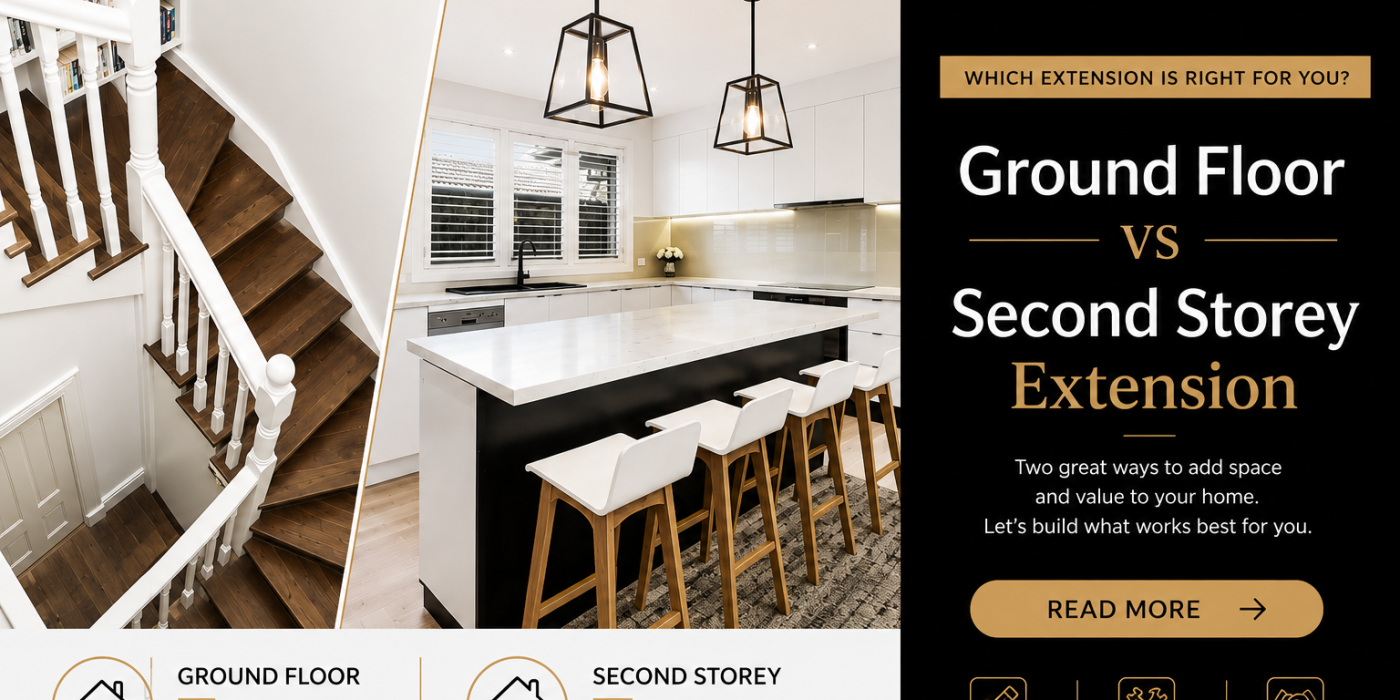
Ground Floor vs Second Storey Extension

Running out of space at home? It happens to many families over time. Rooms start to feel smaller, storage gets tight, and daily life can feel a bit crowded. But moving isn’t always the answer. Many homeowners choose to stay and improve what they already have.

That’s where extensions come in. You can either build out with a ground floor extension or build up with a second storey extension. Both options are common in period homes in Melbourne, especially in homes inspired by Victorian architectural styles, or a classic Edwardian house, or a beautiful Californian Bungalow.

Each option has its own benefits, and the right choice depends on your space, your lifestyle, and how you want your home to feel in the future.

What is a Ground Floor Extension?

A ground floor extension means adding space at the back or side of your home. It’s a common choice for growing families who want a bigger kitchen, living room, or open-plan space.

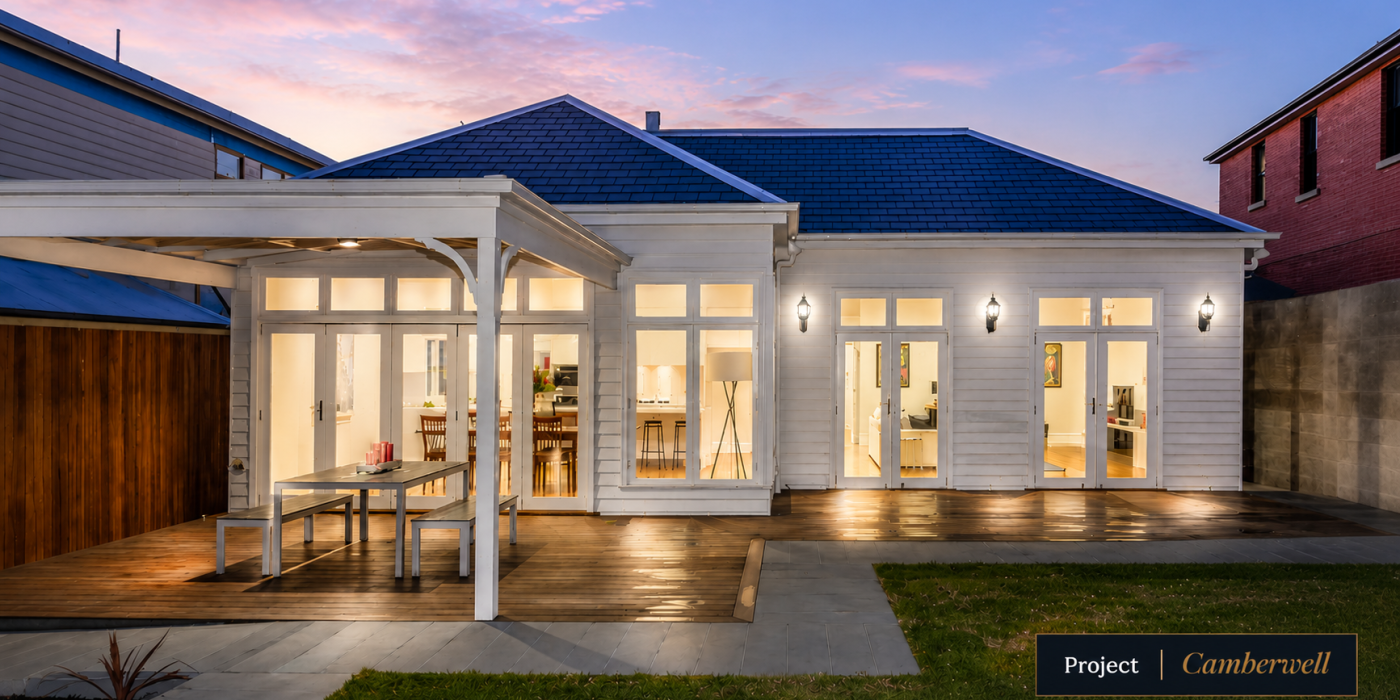
In many period homes in Melbourne, ground floor extension works well because you keep the charm at the front and create a modern space at the back.

Why do people like ground floor extensions?

  • Easy access to outdoor spaces
  • Perfect for open living spaces.
  • Keeps everything at one level.

Things to think about:

  • You need enough land space.
  • It can reduce the size of your backyard.

Ground floor extensions are often seen in period homes, especially when owners want to keep the street view unchanged while improving daily living inside.

What is a Second Storey Extension?

A second storey house extension means building upward instead of outward. You add a full or partial level above your existing home. This is a popular option in projects where land space is limited.

Many homeowners choose a second-story house extension to add bedrooms, bathrooms, or even a home office without affecting their backyard.

Why do people like second storey extension?

  • Keeps the outdoor space intact
  • Adds clear separation between living and sleeping areas
  • Works well in tight blocks
  • Excellent for a spacious master suite

A second storey extension is also an excellent option for period homes in Melbourne, particularly when the goal is to maintain the original appearance while adding more space above.

Ground Floor vs Second Storey Extension: Key Differences

  • Space and Layout

Ground floor extensions spread your home out, while second storey extensions build upwards. If you want to keep your outdoor space, a second storey extension may be the better option.

  • Impact on Your Land

A ground extension takes up yard space; a second storey extension in Melbourne project keeps your outdoor area the same, which is a big plus for families.

  • Cost and Build Time

Costs can vary, but double storey extensions can sometimes cost more due to structure changes. That said, ground floor work can also get expensive if it involves major layout changes.

  • Suitability for Period Homes

For period homes, the choice depends on the era’s design and if there are heritage overlay restrictions. A ground floor extension keeps the original facade intact, while a second storey extension can be designed to elevate the home and street appeal.

How Australian Home Styles Play a Role?

Victorian architectural styles often feature narrow layouts, which is why a rear extension tends to work well. Edwardian homes usually have more width, making both ground floor and second storey extensions possible. Federation homes, which are similar in scale, also allow for flexible extension options while keeping their street presence intact.

Californian Bungalows are another common style in Melbourne. These homes often have more open layouts, making them well-suited for rear extensions that create larger living spaces. You may also come across other period styles, such as Georgian homes or early Victorian homes, each with its own layout and structure.

Many period home owners in Melbourne choose a mix of approaches, to keep the original front rooms and adding modern living spaces either at the rear or above. The right option depends on the home’s layout, block size, and how you want the space to function day to day.

That’s why you’ll see a lot of double storey extensions in Victorian homes, as they offer flexibility without losing the home’s character.

Can You Combine Both?

Yes, and many people do; some double storey extensions include a ground floor extensions Melboune along with an upper level addition. This works well for larger upgrades, especially in period homes in Melbourne, where space and design both matter.

The right choice comes down to how you live and what your home allows.

Thinking About Extending Your Home?

If you are planning a second storey extension Melbourne or considering double storey extensions, get in touch with us today.

We at Period Extensions & Designs focus on preserving the original feel of your home while making it more functional for everyday use. Whether it’s a ground floor extension or a second-story house extension, the goal is the same: to create a home that feels right for you.
CategoriesHome Extensions

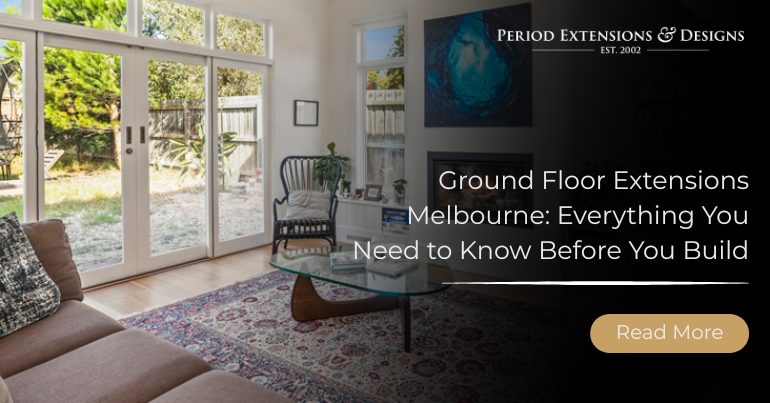
Ground Floor Extensions Melbourne: Everything You Need to Know Before You Build

If your home is starting to feel crowded, a ground floor extension can be a simple solution. Instead of going through the stress of moving house, you can increase your home’s space and make it more functional for your daily routine. Many homeowners choose ground floor extensions in Melbourne because it allows them to stay in their preferred location while improving the feel and functionality of their home.

Ground floor extensions, when planned correctly, can help you open up living areas, bring in more natural light, and improve room flow. Whether it’s a larger kitchen, a connected living and dining area, or simply more space to relax, these changes can make a big difference.

Before you begin building, you should understand how ground floor extensions in Melbourne work, what options you have, and what to plan for so that the entire process is easier and clearer.

Why Ground Floor Extensions Make Sense?

Life changes, families grow, work shifts, and suddenly your home feels tight. Instead of going through the stress of moving, ground floor extensions allow you to stay where you are and build the additional space you need.

In Melbourne, homes often have room to expand outward. That is why ground floor extensions in Melbourne are a popular choice. You can expand your living space, bring in more light, or improve the flow between rooms.

Some common reasons people go for a ground floor extension:

  • In need of a bigger kitchen or living space
  • Wanting an open-plan layout
  • Adding additional bedrooms, bathrooms or a family room
  • Creating an indoor-outdoor connection

Types of Ground Floor Extensions You Can Consider

Not all ground-floor extensions look the same. The area of expansion depends on your home and how you want to use the space.

  • Rear Extensions: The most common option is to extend into your backyard and create more room at the rear of the property. Many ground floor extensions in Melbourne follow this approach because it keeps the front of the house unchanged.
  • Side Return Extensions: If you have unused space along the side of your house, this can be turned into a useful area.
  • Wrap-Around Extensions: This combines rear and side extensions. It gives you more flexibility with layout and design.

Designing Your Ground Floor Extension

When it comes to ground-floor extensions, design is the stage where everything starts to take shape. For some, it might not feel as exciting as the actual building of your project, but this is what decides how smooth or not your project will be.

With the guidance of the Design Team at Period Extensions & Designs, the process becomes much easier to manage, with support at every step.

Focus on Layout and Design

The layout is what really shapes how your extension will look and feel once it’s built. With ground floor extensions, it’s not just about adding extra space; it’s about making sure that space works well with the rest of your home.

A good layout feels natural and easy to move through. Consider how the new space integrates with your current layout and if it offers sufficient natural light. Numerous ground-floor extensions in Melbourne opt for open-plan designs, merging the kitchen, dining, and living areas. This approach can be effective, provided it’s thoughtfully executed.

Set Your Goal Clearly

Before you think about design or budget, you need to be clear about why you are building the extension in the first place. Many people jump in thinking they just need “more space”, but that can lead to confusion later. It helps to pause and think about how you actually live in your home every day.

For example, if your kitchen feels tight, you might want a larger cooking and dining area. If your living room feels closed off, you may want to open it up. In many ground floor extensions in Melbourne, homeowners combine multiple needs, like creating a bigger kitchen while also adding a relaxed family space.

Budget (Think Beyond Just the Building Cost)

Budget is not just about how much the extension will cost.” There are small things people forget, and they add up fast.

Here’s what you should think about:

  • Design and drafting
  • Structural Engineering
  • Council approvals and building permits
  • Construction cost
  • Materials and finishes
  • Electrical and plumbing changes
  • Furniture for the new space

In ground floor extensions in Melbourne, costs can change depending on how much you alter the existing house.

Check Council Rules Early

One of the most important steps in planning ground floor extensions is understanding the local rules. In Melbourne, not every project needs approval, but many do. This usually depends on the size of the extension, how close it is to the boundary, and whether your home is in a heritage area.

The council requirements for ground floor extensions in Melbourne vary depending on your location. That’s why it’s always a good idea to check early rather than assuming everything is fine. If approvals are required and not planned for, it can cause delays in the future.

Taking care of this step early allows your project to move forward without delay. If you’re not sure where to start, our team is here to guide you every step of the way.

Build Smart with Period Extensions and Designs

Period Extensions & Designs can assist you in designing and building a ground floor extension that is both functional and aesthetically pleasing. We understand different home styles and create extensions that feel natural and blend seamlessly between the existing and the new.

Contact us today to take the first step towards a more suitable home.

CategoriesHome Extensions

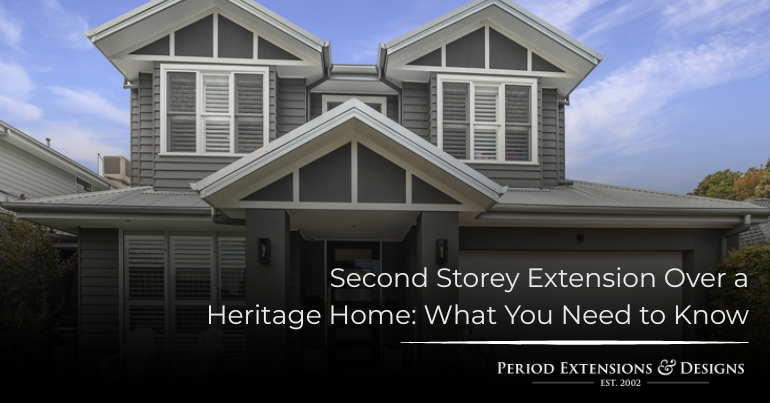
Second Storey Extension Over a Heritage Home: What You Need to Know

A second-storey extension is a smart way to add space without selling up and moving from a home you already love. But when the home is a heritage one, the process is a bit different. You need to think about design, structure, and council rules before you start.

If you’re planning a second storey extension in Melbourne, it helps to know what’s involved early on. A well-planned second-storey house extension can give you more room while still keeping the original character of your home.

Why a Second Storey Make Sense for Heritage Homes?

Most heritage homes were built at a time when families lived differently. Rooms were smaller, layouts were tighter, and there was no need for home offices or open spaces.

A second storey house extension can modernise your home without changing the original charm and beauty of the home.

Here’s why many homeowners choose this option:

  • You keep your outdoor space instead of building into it.
  • The original facade of the front of the home can stay the same.
  • You can add private spaces upstairs while keeping shared areas below.

With double storey extensions, you’re not just adding rooms. You’re improving how the whole house works, and modernising your home to suit your lifestyle.

Know Your Home Style Before You Start

Every heritage home has its own character. Before planning a second storey extension, you need to understand what makes your home unique.

1. Victorian Homes

These homes often have narrow fronts, detailed trims, and long hallways. A second storey extension here is usually set back so the front view of your home isn’t impacted.

2. Edwardian Homes

These are a bit wider and simpler in design. A second storey house extension can be easier to blend in if you follow the same roof lines and window styles.

3. Californian Bungalows

Low and wide, these homes have a strong street presence. For double storey extensions, the top level is often built to replicate the front fascade.e thus making a statement front gables.

4. Federation Homes

These homes use brick, timber, and classic roof shapes. A second storey extension project here needs careful material matching so the new and existing blend aesthetically.

Knowing your style helps guide every decision, from design to materials.

Council Rules and Heritage Controls

This is where many people get surprised. A second storey extension often requires the following:

  • Structural Engineering,
  • Town Planning Approval,
  • Building Permit.

Councils often want to protect the heritage of older homes. you may be required to:

  • Keep the front facade unchanged
  • Set the new level back from the street
  • Select from  particular colours and materials that match the area and style

Therefore, you may need to get town planning approval from Counsil before you build. This part can take time; it’s not unusual for approvals to take a few months. A clear understanding of these requirements from the start helps keep the process smooth and uninterrupted. The team at Period Extensions & Designs are experts when it comes to town planning approvals.

Structural Work: What Happens Behind the Walls

This part is easy to overlook, but it’s one of the most important steps.

Most heritage homes were not built for a second storey extension. So before anything goes up, the base must be checked.

This involves:

  • Strengthening the foundation
  • Replacing old timber supports
  • Adding steel beams for support
  • Engineering for the build

In many cases, parts of the home may need to be opened up to allow for these changes. It’s also important to have the right reports prepared by a structural engineer, as these are needed to move forward with permits and the build. Our team can take care of this process as part of a start-to-finish service, covering everything from design and approvals through to construction.

Stairs, Layout, and Flow

One thing people don’t always think about is where the stairs will go.

A second storey house extension needs a staircase that:

  • Fits naturally into the layout
  • Space becomes more functional
  • Connects both levels smoothly

This may affect the layout of your ground floor. Rooms may require minor changes to accommodate stairs. In well-planned double-story extensions, the flow is effortless. You move between levels without feeling forced or constrained.

Build Up Without Losing Charm

Planning a second storey extension on a heritage home can feel like a big step. That’s where Period Extensions & Designs comes in. We know how to handle second-story extensions in Melbourne with care, preserving the original style while adding space that is functional for your current lifestyle.

If you’re thinking about double storey extensions, enquire with Period Extensions & Designs today and let our team help design and build an extension that suits your home and style.

CategoriesPeriod Homes

What are common Victorian Architectural Styles found in Australian homes?

There are many beautiful Victorian houses in some of Melbourne’s best-known suburbs. Each of these homes has its own story, shaped by when it was built and by the people who have lived in it over the years. You’ll find them across the inner-north, inner-east, and bayside areas, in places like Fitzroy, Carlton, Collingwood, East Melbourne, South Yarra, Hawthorn, Albert Park, and Williamstown.

Built between the mid-1800s and early 1900s, these homes are a strong part of Melbourne’s architectural identity. They are easy to recognise, with features like narrow terrace layouts, iron lacework, and patterned brick exteriors. Even today, these details continue to stand out and give each street a sense of history.

What makes Victorian style homes special is not just how they look but how they have lasted over time. Many have been updated inside while still keeping their original features on the outside. This balance between old and new is what makes Victorian homes so appealing to homeowners today. They offer character but also the chance to create a space that suits modern living.
As Melbourne continues to grow, these homes remain an important part of the city’s streetscape, reminding us of where it all began while still being lived in every day.

What Are Victorian Style Homes?

Victorian style homes were built between the 1840s and early 1900s during the time of Queen Victoria. In Australia, especially in Melbourne, these homes became popular during the gold rush period when cities were growing fast.

They started off simple but became more detailed over time.

You’ll notice things like:

  • Decorative fronts
  • Iron lacework
  • High ceilings
  • Separate rooms with formal layouts

That’s why many people today still love these period homes, they feel full of character and history.

Victorian architectural styles found in Australian homes

1. Mid-Victorian Style (1860–1875)

This type of house came into its own during the Victorian Gold Rush, and you’ll still see many of these period houses across older suburbs today.

The mid-Victorian-style homes are known for:

  • Decorative façades
  • Cast-iron lacework
  • Detailed mouldings
  • Decorative brickwork

But there’s more to them than just the facade. Inside, these period homes were built for a different lifestyle. Families preferred privacy, so rooms were often separated rather than open. You’d usually find a hallway running down the middle, with bedrooms and sitting rooms placed on either side.

Kitchens were often at the back, away from the formal living and dining areas. High ceilings helped with airflow, which made a big difference before modern cooling systems.

Many homeowners today preserve the front of these Victorian-style homes, while opening up the back to create a more usable layout. This mix of old and new is very common in period homes in Melbourne

2. Boom Style (Late Victorian)

As Melbourne grew richer during the late 1800s, homes became more detailed and expressive. This is when Boom-style houses were built, one of the more eye-catching Victorian architectural styles.

Boom-style homes are:

  • More decorative
  • Built to stand out
  • Designed with grand verandahs and detailed fronts

These Victorian style homes were often designed to show status. You’ll notice things like rendered walls, parapets, and a strong street presence. The detailing was not just for beauty; it was also a way for homeowners to show success.

In many period homes in Melbourne areas, Boom-style homes still stand proudly on wider streets. Inside, they often follow a similar layout to earlier period homes, but with slightly larger rooms and more attention to design.

Today, these homes are often restored carefully; people often preserve the detail of the front facade while improving comfort inside, which helps maintain the value of these unique period homes.

3. Victorian Terrace Houses

Terraces are one of the most recognised Victorian-style homes, especially in inner-city locations.

You’ll usually see:

  • Homes built side by side
  • Narrow front designs
  • Decorative balconies and ironworkThese period homes were built to fit more people into growing cities. Even though they look compact, they were designed to use space smartly. Rooms are arranged one after another, often leading to a small backyard.In period homes in Melbourne, terrace houses are very popular because of their location. They are close to the city, cafes, and transport, which makes them ideal for modern living.Many terrace-style Victorian architectural styles have been updated inside. Open-plan kitchens, added light, and better use of space, including added bedrooms on a second level, have made them more practical, while the front still keeps that
    classic look.

    4. Victorian Filigree Style

This is the style most people think of when they picture Victorian-style homes.

Filigree homes are known for:

  • Detailed iron lacework
  • Full verandahs
  • Timber detailing

What makes this style special is the level of detail. The ironwork is not just decoration; it gives the home a soft and welcoming feel. When you walk through streets filled with these period homes in Melbourne suburbs known for the verandahs, which create a strong street rhythm, you feel a sense of history.

These homes were also designed with climate in mind; verandahs helped provide shade and made outdoor space more usable.

Many owners of these period homes take extra care when restoring filigree details. Even small changes can affect the overall look, so keeping the original design is often a priority.

5. Victorian Gothic Style

Victorian Gothic homes are less common, but they still play an important role in the range of Victorian architectural styles found in Australia.

The Victorian Gothic style homes include the following:

  • Pointed arches
  • Steep roofs
  • Tall, narrow windows

These Victorian style homes have a stronger and slightly dramatic appearance compared to other period homes. The design was influenced by older European buildings, which is why they feel a bit different from typical Melbourne homes.

You won’t find as many of this style of period homes in Melbourne streets, but when you do, they stand out right away. They add variety and show how wide the range of Victorian architectural styles really is.

Bring Your Period Home to Life with the Right Approach

If you own an original Victorian style home and are planning changes to this period home in Melbourne, it’s important to get the balance of old and new right.

Period Extensions & Designs focuses on helping homeowners update period homes without sacrificing their original charm. A thoughtful design can go a long way in turning an old space into something that still feels true to its roots, just more comfortable and functional for everyday life.

CategoriesHome Extensions

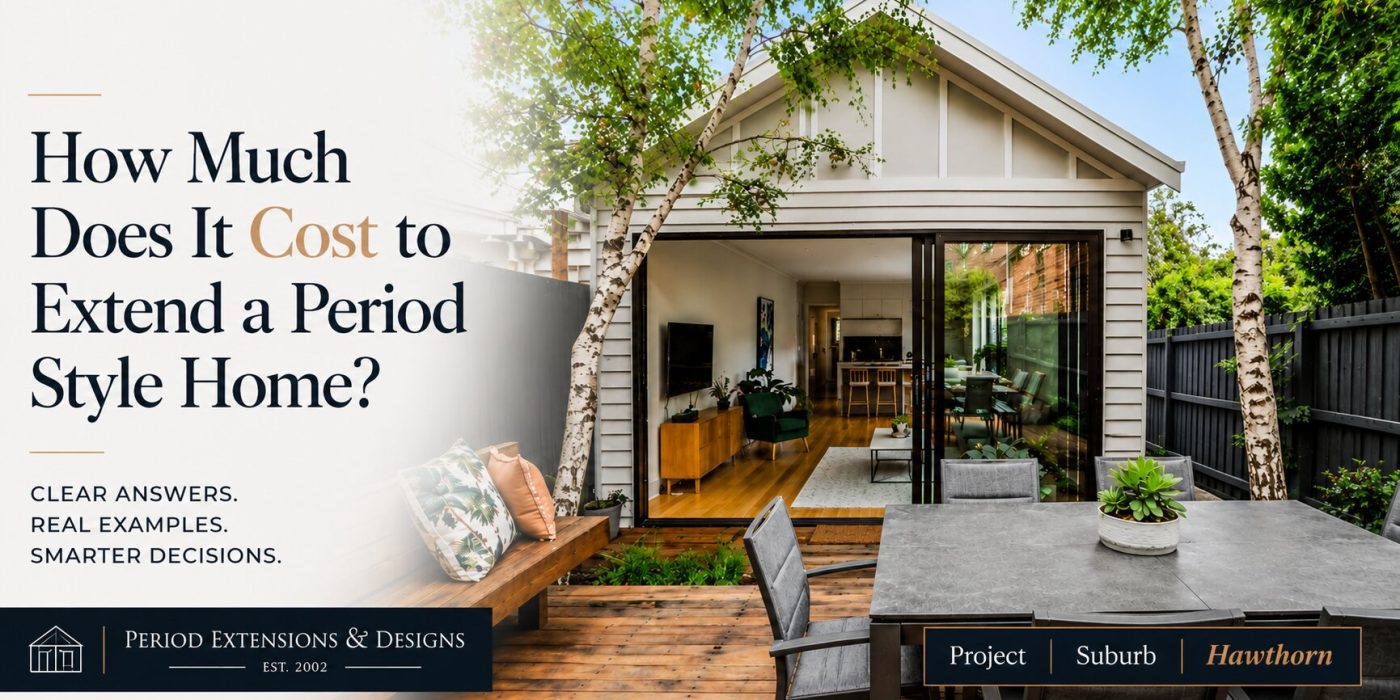
How Much Does it cost to extend a Period style home in Melbourne?

If you’re planning to extend your home, you’ve probably wondered what really drives the cost. It’s not just about how big the extension is or how it looks on paper. The cost of a home extension in Melbourne is shaped by a mix of factors. Your home’s current condition, the layout you choose, the building materials, the fixtures and fittings, and even how easy it is to access your site will all play a part in determining the cost.

Two homes with the same size extension can end up with very different house extension costs simply because one has a more complex layout or needs extra work before building starts. This is why when it comes to extending a period home, a price per sqm is difficult to establish. A rough estimate of the price per sqm may not include the details that often make the biggest difference and can leave the homeowner unprepared for costs they weren’t expecting.

Understanding these factors early on helps you plan in a more practical way. It also makes it easier to set clear expectations and avoid surprises once the project begins.

Why Period Homes Need a Different Approach?

Extending a period home is not the same as extending a relatively new house. It needs more thought, more care, and a better understanding of how older homes were built.

Period homes were built and designed according to the style relevant to their time. The way rooms are placed, the materials used, and even how light enters the space, all of it is different to the way modern homes are built. Different styles of period homes, as well as the existing condition of the home, can impact the home extension cost in Melbourne.

Key Factors That Shape The Cost Of A Home Extension in Melbourne

Extension size and layout

The size of an extension is the first thing people think about, and yes, it plays a role. The larger the space you want to add on, the more materials and time are needed. That’s where people start looking at the extension price per sqm to get a rough idea.

But here’s the thing: two extensions with the same size can be very different in terms of layout and, hence, the materials and labour required. A simple open space at the back is one thing. A layout with multiple rooms, hallways, or tricky shapes is another.

So while the extension price per sqm gives a starting point, the layout often shifts the final house extension cost more than people expect.

Design choices and finishes

This is where costs can vary depending on the materials and finishes you choose. Some homeowners prefer to keep things simple, while others go for higher-end options that change the overall look and feel of the space.

For example:

  • Laminate benchtops vs marble or stone
  • Timber windows vs aluminium
  • Timber flooring vs laminate or hybrid
  • Different fittings and fixtures throughout the home

Each of these choices can influence the home extension cost in Melbourne, even if the size of the build stays the same. It’s not about the style of the home but the level of finish and materials selected.

When working with a period home, the goal is usually to carry the character through in a way that feels seamless and natural. The materials you choose play a big part in how well the new space connects with the original home.

Materials and finish choices

Every home is different, and so are the choices people make. Some homeowners prefer a simple finish that blends in quietly. Others want a closer match to the original features.

Your choices might include:

  • Type of flooring
  • Style of doors and windows
  • Kitchen and bathroom fittings
  • Lighting and fixtures

Even when working within a similar extension price per sqm, these choices can shift the overall house extension cost. It’s not about going high-end. It’s about choosing what fits your home and how detailed you want the finish to be.

Condition of the existing structure

Before any extension starts, the current home needs to be assessed properly. Some period homes are well-maintained. Others may have underlying issues that require attention.

 These might include:

  • Old wiring or plumbing
  • Uneven floors
  • Weak support structures
  • Signs of damp or wearing

Planning regulations and approvals

Planning regulations and approvals are a reality for period homes in Melbourne, particularly those situated within heritage zones.

Before you start altering anything, you need to get the green light from the relevant council and the appointed building surveyor. Sometimes, even minor design tweaks require a formal review. 

While it doesn’t always directly inflate the extension’s cost per square meter, the approval process can certainly impact the project’s progress. Delays or design alterations can, in subtle ways, affect the overall expense of a home extension in Melbourne.

Ready to Plan Your Extension the Right Way?

If you’re thinking about extending your period home, it helps to get the right advice early on. At Period Extensions & Designs we work closely with homeowners to plan spaces that feel natural and practical.

From layout ideas to design details, the focus is on helping you make clear decisions without the stress. If you’re exploring your options, start a conversation with our architecture and design team and take the first step toward a home extension cost in Melbourne that works for you.

At Period Extensions & Designs, we don’t offer a price per sqm, as it may be misleading and may not reflect the full scope of the project price. Instead, we offer a free consultation and an estimate after a site inspection

Contact Us
Add to cart
DOWNLOAD OUR

TOP TIPS FOR RESTORING YOUR HOME

With over 20 years in the business, we’ve seen and done it all. Download our FREE GUIDE to restoring your period home today.

Thank You!

One of our designers will give you a call as soon as possible.

Consultation Request