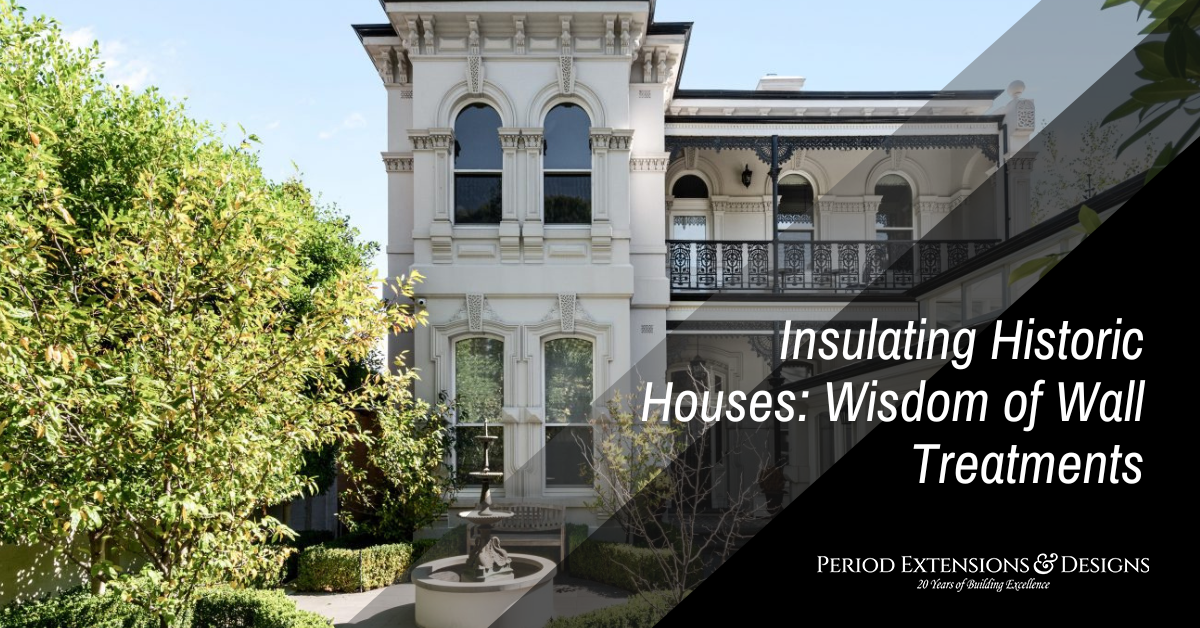
Internal wall insulation installed in heritage home to improve energy efficiency discreetly.
CategoriesPeriod Home Renovation

Insulating Historic Houses: Wisdom of Wall Treatments

Historic homes tell stories. Every crack, every cornice, every weathered wall holds history. But time brings change, and comfort expectations shift. Today’s families want heritage charm and year-round liveability. That’s where insulation steps in—quietly, carefully, and cleverly.

Insulating historic homes isn’t simple. You can’t slap on fibreglass batts and call it a day. These homes breathe. Their walls absorb moisture, shift with the seasons and need to remain true to their era. Thoughtful wall treatments can do more than improve comfort—they can protect history.

We’re diving deep into smart, sensitive wall insulation techniques that suit period properties. If you’re planning home renovations in Melbourne, this is your essential guide.

Understanding Traditional Wall Construction

Older homes weren’t built like today’s. Most period houses—Victorian, Edwardian, Federation—use solid brick or stone walls without any cavity. That means there’s no space for insulation. And if you do it wrong, you’ll trap moisture, crack walls, and even grow mould.

Traditional walls manage moisture naturally. They absorb and release water through the wall’s surface. That’s why adding non-breathable layers (like plastic or foil-backed insulation) often causes more harm than good.

To work with old walls, not against them, you need breathable insulation. These allow vapour to pass through slowly, without blocking airflow completely. Materials like wood fibre boards, lime plaster and hemp-lime are ideal. They support the wall’s original structure, maintain airflow and boost thermal comfort.

Improving your period home with energy-smart extensions also means respecting what’s already there. Don’t compromise the past chasing modern standards—blend them.

Why Wall Insulation is Worth the Effort

Insulating walls in older homes offers real wins:

  • Reduced energy bills: Less heat escapes in winter, less comes in during summer.
  • Better comfort: Fewer drafts, more stable temps.
  • Lower carbon footprint: Save on heating and cooling.

But it goes deeper than cost. Insulation preserves buildings. Fluctuating heat and moisture can damage walls, paint, plaster and even timber floors. By controlling these changes, insulation protects the home’s structure.

Modern insulation can match period features too. Breathable renders, slimline boards and hidden fixings let you insulate without ruining aesthetics. You don’t need to cover ornate cornices or original brickwork.

Case in point? A Federation-style home in Brunswick had cold, damp internal walls. By adding internal wood fibre boards finished with lime plaster, the owners boosted warmth and kept every decorative detail intact.

Restoring the character of your period home with thoughtful renovations often starts behind the walls.

Internal vs External Insulation: Weighing Your Options

There’s more than one way to insulate a wall. Internal insulation adds layers inside the home. External insulation adds them outside. Each has pros and cons.

Internal insulation works well if:

  • You want to keep the exterior look untouched.
  • You can afford to lose a few centimetres of space.
  • You’re redoing internal finishes anyway.

External insulation suits cases where:

  • The façade isn’t heritage-listed or decorative.
  • There’s room to extend the wall outwards.
  • You want to wrap the building fully for best results.

In heritage areas, councils often prefer internal methods. That keeps the street view unchanged. But internal insulation needs careful work. You must avoid gaps, thermal bridges and trapped moisture.

Hybrid systems can also work. That means insulating part inside, part outside—like adding external boards on back walls, and breathable plaster on internal feature walls.

Sustainable renovation options for period home insulation are growing. Look for natural materials, low-embodied carbon, and reversible systems where possible.

Choosing Breathable Wall Treatments

Let’s break down the top breathable solutions for period homes:

  1. Wood Fibre Boards
    These dense panels insulate and let vapour move. They’re often finished with breathable render. They also reduce sound and improve fire resistance.
  2. Hempcrete
    A mix of hemp shiv, lime and water. Applied as a wall coating or block. It stores carbon, insulates well, and supports moisture movement.
  3. Lime Plaster on Laths
    Traditional method. Add timber laths to walls, then coat in lime plaster. Not high R-value but improves comfort and breathability.
  4. Insulating Lime Render
    Used on internal or external walls. Made with natural aggregates for added insulation.

Each has different thickness, performance and cost. But they all suit the way old homes work.

Avoiding Common Mistakes in Heritage Insulation

Here’s what not to do when insulating old walls:

  • Don’t seal walls completely: Moisture needs to escape.
  • Avoid synthetic, foil-backed boards: These block vapour.
  • Don’t insulate damp walls: Always fix water issues first.
  • Don’t ignore thermal bridges: Gaps around floors, windows, and joists let heat out.

Instead, start with a moisture survey. Check for rising damp, leaks, or condensation issues. Next, design a whole-house approach. Walls, roofs, floors and windows all affect performance.

And always test small areas first. Materials behave differently depending on age, site and build method.

Heritage-Approved Materials: What to Look For

Most councils require that heritage homes use sympathetic materials. That means breathable, natural and non-toxic options. Here’s a few approved by heritage bodies:

  • Lime-based products: Plaster, render, mortar.
  • Natural insulation: Hemp, sheep’s wool, wood fibre.
  • Mineral boards: Calcium silicate or perlite-based for high moisture zones.

Look for certifications like:

  • GreenTag
  • BREEM ratings
  • Heritage Council approvals

These help you meet building codes without risking the property’s status. They also prove your upgrades are safe, lasting and low-impact.

Thermal Improvements Without Compromising Aesthetics

One of the biggest fears? Losing character. That’s fair. Nobody wants to hide original brickwork behind polystyrene panels.

Here’s how to keep the charm:

  • Use slim insulation boards in tight spaces.
  • Highlight original features (cornices, mouldings) by insulating around them.
  • Match render and plaster styles to existing finishes.
  • Keep some feature walls exposed, and insulate less visible areas instead.

Smart design can make insulation near invisible. Skilled tradespeople can install systems without touching ceiling roses, skirting boards or pressed metal panels.

It’s not all or nothing. Every improvement helps.

Climate Control That Respects History

Australia’s weather is harsh—hot summers, cold winters, big humidity shifts. Old homes weren’t built for this. But insulation helps regulate internal temps.

Thermal mass (like solid brick walls) can store heat, but only if you manage moisture. That’s why breathable insulation matters more in heritage homes than new builds.

Passive heating and cooling works best with well-insulated walls. Add solar gains, good window shading and airtightness upgrades, and you’ll get big comfort gains with low energy input.

Insulated walls also cut noise—a bonus in busy suburbs or urban spots.

Planning and Approvals for Wall Upgrades

Before touching a single wall, check with your local heritage or planning office. Most upgrades inside the home are easier to approve. But you still need to show:

  • Materials match the home’s style.
  • No major visual change will occur.
  • Upgrades are reversible if needed.

Hire a designer or architect familiar with heritage homes. They’ll help plan around regulations, submit drawings, and manage the project.

Many councils now encourage sustainability in heritage buildings. But you need to follow process.

FAQs

  1. Can I insulate a heritage home without damaging the walls?
    Yes, if you use breathable materials. Heritage walls need to “breathe”—that means moisture must pass through slowly, not get trapped. Materials like wood fibre, hemp-lime or breathable plaster work best. Avoid plastic sheets or foil-backed boards. Always inspect for damp first. Fix leaks or rising damp before installing anything. Once the walls are dry, you can add insulation inside without affecting the home’s exterior. Use lime-based plaster or insulating boards that match original textures. Done right, insulation can improve comfort without harming walls.
  2. How much space will internal wall insulation take up?
    It depends on the material. Slim systems like aerogel or thin wood fibre boards can be under 40mm thick, including finish. Thicker systems like hempcrete can add 100mm or more. In small rooms, that can affect furniture layout or doorway widths. But clever design helps. You can insulate only the coldest walls, leave decorative walls exposed or recess built-in furniture to save space. The warmth gained often outweighs the slight space loss. Plus, you’ll cut heating costs long-term.
  3. Will I need council approval for insulating walls?
    If the property is heritage-listed, yes—especially if changes affect the look of the home. Internal works might not need a permit, but it’s best to check. Councils want to protect original materials and features. Provide details on materials, finishes and reversibility. Using traditional methods and keeping original features exposed helps get approval. Work with a heritage specialist. They know what gets through planning and what gets knocked back. Better safe than sorry.
  4. Can I DIY insulation in a period home?
    Not recommended for walls. Insulating historic walls needs care. You must understand how moisture moves, how materials interact and how to avoid cold bridges. Small mistakes can cause big problems—like mould or cracked plaster. You can DIY simple draught-proofing or roof insulation. But for walls, hire a pro with heritage experience. They’ll test for damp, plan the right system, and install it correctly. Some government rebates also require professional installers.
  5. What insulation is best for solid brick homes in Australia?
    Breathable insulation is best. That includes:
  • Wood fibre boards with lime plaster
  • Hempcrete applied in layers
  • Calcium silicate boards for high moisture spots
  • Lime render with insulation beads for external use

These let moisture move and keep walls dry. In hot areas, reflective coatings might help too—but not on their own. Combine them with internal insulation for best results. Each home needs a tailored plan. Climate, budget, wall type and style all matter.

Where Past Meets Present: Making Smart Moves Today

Insulating heritage walls isn’t about quick fixes. It’s about long-term care. Done right, it gives comfort, saves energy and protects old homes for future generations.

Treat every wall with respect. Think before drilling. Choose materials with history in mind. Don’t just copy what works in new builds—old homes deserve better. If you’re ready to take the next step, visit Period Extensions & Designs to explore smarter, safer ways to upgrade your period home.

Please call us today at Period Extensions & Designs on (03) 9882 5255 or make an enquiry.

Bay window with cushioned seating in a heritage home's reading nook.
CategoriesPeriod Home Renovation

Efficient Lighting: Brightening Your Heritage Home

Heritage homes are packed with charm, character, and craftsmanship that modern builds often lack. But keeping that timeless look while updating lighting? That’s where things can get tricky. Old homes weren’t built for modern lights or today’s energy needs. So, if you’re tackling home renovations in Melbourne, you’ll want to get the lighting just right—efficient, stylish, and sympathetic to the original design.

Whether you’re fixing up a Victorian terrace, an Edwardian cottage, or a Federation-style house, this guide will walk you through how to light your heritage home smartly. It covers all you need—ideas, examples, and practical tips—to keep your place glowing without compromising its soul.

Understand the Bones of Your Home

Every heritage home tells a story. Before making changes, you need to understand the structure and original lighting intent. Old homes often have high ceilings, thick walls, and small windows. Natural light may be limited, especially in internal rooms.

Check ceiling roses, cornices, and wall textures. These features frame how light plays across the room. You don’t want to stick a modern pendant in the middle of a ceiling rose meant for a chandelier.

Then there’s wiring. Old electrical systems might not handle LED setups or smart lighting. You may need a full rewire or at least an upgrade. An electrician with experience in older homes can help you avoid damage while ensuring safety and code compliance.

From there, think about your lighting needs—task, ambient, accent, and decorative. Each type plays a role and works best when layered together.

Respecting Style While Updating Light Fixtures

Lighting in heritage homes isn’t just about brightness—it’s part of the decor. Original fixtures like art deco sconces or brass pendant lights often become focal points. Replacing them outright can feel like a loss, but there’s a middle ground.

You can retrofit classic fixtures with efficient LED bulbs. These use less power and last longer. Some globes even mimic the warm glow of old incandescent bulbs.

If original fittings are broken, look for vintage-style replicas. Many Australian suppliers now offer energy-efficient options that echo classic looks. You can also get custom-made fittings that blend past aesthetics with modern tech.

For example, a couple renovating a 1920s bungalow in Fitzroy used replica gaslights converted to LED. They gave the home a soft glow that matched its period charm but slashed the power bill. When planning designing a period bathroom with optimal lighting, soft wall lights and ceiling diffusers create a luxe mood without overpowering the space.

Maximising Natural Light First

Before installing any lights, ask this: are you using natural light well? Many heritage homes have untapped potential. A few tweaks can make a massive difference.

Open up heavy curtains and replace dark shutters with lighter treatments. Use mirrors to bounce daylight deeper into rooms. Choose light wall colours that reflect sunlight instead of soaking it up.

Skylights or sun tunnels can also help. They let light into darker areas like hallways or bathrooms. Modern models have built-in diffusers that spread light softly and evenly.

A home in Northcote used a series of discrete skylights in its kitchen and living area. The owners said it transformed their daily routine, making the space feel larger and more alive. If you’re serious about maximising space and light in period homes, natural lighting should always be step one.

Layering Lights for Function and Warmth

One ceiling light won’t cut it—especially in homes with high ceilings. You need layers.

  • Ambient lighting sets the tone. Use central ceiling fixtures or multiple pendants with dimmers.
  • Task lighting helps you see clearly. Think reading lamps, kitchen bench lights, or bathroom vanity strips.
  • Accent lighting highlights features like fireplaces, artwork, or pressed metal ceilings.
  • Decorative lighting adds flair. This includes chandeliers, wall sconces, or vintage lamps.

Layering also helps reduce shadows and avoids that cold, clinical vibe some LED setups bring. Use dimmable options so you can adjust based on time of day or activity.

In one lighting project inspired by period home renovations, a couple installed a layered system in their formal lounge—wall sconces for mood, a central pendant for reading, and uplights to highlight ornate plasterwork. The result was warm, elegant, and energy smart.

Energy Efficiency Without Compromise

Heritage charm doesn’t have to mean sky-high energy bills. LEDs are your best friend. They use up to 80% less energy than halogen bulbs and last 10 times longer.

Choose bulbs with a warm white (2700K–3000K) colour temperature. These mimic traditional globes and won’t look out of place. Pay attention to lumens (brightness) instead of watts.

Use motion sensors or timers in hallways, pantries, or outside. Smart switches let you control lighting from your phone and set schedules, all without adding visible tech to your walls.

Also, consider solar-powered garden lights. They’re subtle and effective—perfect for showcasing old brickwork or a heritage fence at night.

Smart Lighting That Blends In

Smart homes aren’t just for new builds. You can integrate smart lighting into old homes without turning them into tech labs.

Use smart bulbs in old fittings. These give you remote control, dimming, and colour change without rewiring. Choose systems like Philips Hue or LIFX, which don’t need a hub and work over Wi-Fi.

Smart switches are great too. Some models look just like classic toggles but come packed with automation features.

In a Federation home in Camberwell, owners used vintage-style switches that connected to a smart lighting grid. They could schedule their porch lights, dim living room lighting for movie nights, and even switch off everything with one button before bed.

Keep the tech hidden and your home keeps its old-school soul.

Outdoor Lighting for Safety and Style

Don’t forget the exterior. Path lights, porch lighting, and garden uplights not only boost safety—they make your home look magical at night.

Use low-voltage LED systems or solar lights. These save energy and require less wiring. Stick to warm white tones to match traditional facades.

Feature lighting can highlight trees, original stonework, or stained glass windows. Wall-mounted lanterns work well for front entries. Make sure the style suits your era—think cast iron for Victorian homes or curved brass for Art Deco.

When lighting outdoor heritage spaces, keep it soft. Too much brightness will wash out details and create glare.

Lighting for Hallways and Stairwells

These parts often get overlooked. But in heritage homes, they can feel dark and narrow. Fixing this helps safety and makes transitions between rooms feel more seamless.

Use wall sconces or picture lights along hallways. Install LED strip lighting under stair treads for subtle safety. You could also hang a pendant or chandelier in stairwells to create drama and function.

One couple in Elsternwick used vintage coach lights spaced along their main hallway. Paired with a central art deco pendant, it gave the space rhythm and style. Subtle updates like this bring life to forgotten corners.

Choosing the Right Electrician

Not every sparkie is trained to handle heritage jobs. Choose one with proven experience in period homes. Ask for photos, reviews, and referrals.

A good electrician will:

  • Respect the existing structure and finishes
  • Know how to retrofit lighting with minimal disruption
  • Offer energy-smart solutions without ugly add-ons

If they rush or suggest cutting into features without care, keep looking.

Heritage homes deserve tradespeople who treat them with respect. It’s worth the extra time to find the right one.

Frequently Asked Questions

1) Can I use LED lights in old fixtures without rewiring?
Yes, in most cases. LED bulbs now come in standard bayonet and screw bases, so they fit into old sockets. Just check the fixture’s condition and wattage limit. If it’s an antique fitting, have it inspected by an electrician first. Some older fixtures may need rewiring to ensure safety. Use dimmable LEDs for extra control, and choose warm white to keep that vintage feel.

2) What’s the best lighting layout for a heritage kitchen?
Start with layered lighting. Use a ceiling pendant or flush-mount for general light. Add task lights—like under-cabinet strips—for prepping food. If you have a dining area, consider a chandelier or hanging light above the table. Choose fittings that match your home’s style. Think enamel shades or antique brass. Dimmers help shift the mood from dinner prep to casual meals. Always include ventilation and safety checks for lighting above stoves.

3) How can I improve bathroom lighting in a period home?
Mix function with style. Wall sconces beside or above mirrors give great task light. Add a central pendant or flush light for general use. If space allows, include natural light with frosted windows or a skylight. Use LED options with a high CRI (colour rendering index) to ensure true skin tones. Look into vintage-look fittings with modern internals when designing a period bathroom with optimal lighting. Always ensure fittings are moisture-rated.

4) Are there ways to keep heritage light switches but make them smart?
Yes, you can! Some companies make retrofit switch modules that sit behind your existing switch plate. You keep the look but gain smart control. Other smart switches come in old-style designs—toggle or rotary—but link to apps and automation systems. Installation does need a qualified electrician. It’s a great option if you want convenience without giving up style.

5) Will lighting upgrades damage my heritage home’s value?
Not if done right. In fact, good lighting can boost value. It highlights features, adds comfort, and shows the home’s best side. The key is subtle integration. Don’t rip out original fixtures unless you must. Instead, upgrade wiring behind the scenes and use period-appropriate fittings. Efficient lighting also lowers running costs, which buyers appreciate. With care, upgrades can enhance both form and function.

Keep the Glow Alive in Every Room

Efficient lighting isn’t just about saving energy. It’s about letting your heritage home shine. The right setup adds comfort, beauty, and value. It brings out what makes your space special and makes it more liveable every day.

Think about natural light first. Respect the old bones. Add layers of smart, efficient light that work behind the scenes. With the right team, plan, and mindset, your home can glow brighter than ever—without losing its soul.

If you’re ready to light up your period home the right way, check out the expert team at Period Extensions & Designs. We know how to bring out the best in old homes with skill, care, and heart.

Please call us today at Period Extensions & Designs on (03) 9882 5255 or make an enquiry.

"Skylight introducing natural light into a traditional living room.
CategoriesPeriod Home Renovation

Custom Windows: Choosing Styles Suitable for Period Homes

The charm of a period home lies in its history. However, keeping that charm intact while updating parts of the house, like the windows, takes thought and care. You can’t just stick in any old window and call it a day. Period homes need window styles that match their character. If done right, custom windows don’t just look good—they also boost energy use and comfort.

That’s where things get interesting. You’re not limited to copying what was there before. With the right approach, you can combine tradition with smart modern upgrades. Whether you’re mid-reno or just planning your dream design, this guide will help you make choices that suit both your home’s past and its future.

This is especially helpful if you’re planning home renovations in Melbourne. You want windows that fit your home’s style and meet today’s standards too.

Understanding the Architecture of Your Period Home

Each era had its own look and feel. Victorian homes, for example, often had tall sash windows with fine detailing. Edwardian homes might lean toward bigger panes and simpler trims. Federation houses love stained glass and decorative timber. If you ignore these details, new windows can feel out of place.

So before choosing a window style, learn what makes your home’s architecture unique. Look at:

  • The shape and size of original windows
  • The type of glass used (clear, frosted, coloured)
  • Frame materials and paint colours
  • Positioning of windows on the façade

Getting these details right means the new windows won’t stick out like a sore thumb. They’ll look like they’ve always belonged. This is key when restoring the exterior of a period home.

Matching Window Types to Architectural Styles

Here’s where we dig into what works best for specific home styles.

Victorian Homes
Think tall, slim sash windows with detailed mouldings. These windows often have small panes, timber frames and ornate architraves. Stick with vertical sliding sashes and avoid wide panes—they just don’t suit the era.

Edwardian & Federation Homes
These homes like larger windows with casement styles or even leadlight details. Timber is still king, but designs start to open up. You might see bay windows, grouped casements or fixed windows paired with stained glass panels. Keep the window proportions consistent with the original ones.

California Bungalows
These prefer chunky window frames, often grouped casement windows or double-hung sashes. The timber frames tend to be broader, and the windows are usually set within deep reveals.

When choosing window types, ask yourself: “Would this style have existed when my house was built?” If not, it may throw off the balance. Getting the details right will improve the exterior appearance of your period home and even raise its value.

Balancing Heritage Looks with Modern Performance

Old windows look good but they often don’t perform well. They can be draughty, hard to open or let in too much noise. Custom windows let you keep the heritage style but bring in better function.

Some ways to strike this balance:

  • Double glazing hidden inside traditional-looking sashes
  • Timber-alternative frames that mimic wood but need less upkeep
  • Slimline aluminium for rear-facing windows where looks matter less

Take a Federation home in Carlton. The owners replaced old single-glazed casements with timber-framed double-glazed replicas. The look stayed true, but their heating bills dropped sharply. That’s smart design in action.

Check with your local council before replacing windows. Many heritage areas have strict rules. Getting it right the first time avoids stress later. You’ll also benefit from how glazing creates more light with an extension, which opens up older homes in clever ways.

Custom Window Materials: Pros and Cons

You’ve got a few choices when it comes to materials, and each one brings its own benefits and drawbacks.

Timber

  • Pros: Looks authentic, easy to paint, suits all period homes
  • Cons: Needs upkeep, can swell or crack
  • Best for: Front-facing windows and high-detail areas

Aluminium (timber-look finishes available)

  • Pros: Low maintenance, durable, works for back extensions
  • Cons: Can look too modern if not done right
  • Best for: Secondary areas or modern additions

uPVC

  • Pros: Energy efficient, weather resistant
  • Cons: Often doesn’t suit heritage style
  • Best for: Hidden windows or energy upgrades with tight budgets

When choosing material, focus on the parts of the house where it matters most. The front of the home usually needs full heritage detail. Out the back, you can loosen up a bit.

Window Colours That Work with Period Styles

Colour plays a big role in how a window blends with your home. Period homes often used muted or earthy tones, nothing too bold or shiny.

Here’s a rough guide:

  • Victorian: Deep greens, browns, blacks
  • Edwardian: Soft creams, whites, muted blues
  • Federation: Classic green and cream combos
  • Bungalows: Earth tones—greys, dark reds, olive greens

It’s best to match window colours to other features like fascia, gutters or fences. This keeps everything looking tied together. Avoid glossy finishes—they rarely suit period exteriors.

Energy Efficiency Without Compromising Character

Older homes aren’t known for keeping the heat in or the noise out. But modern window technology has come a long way.

Here’s how you can boost performance:

  • Use low-e glass to reduce heat transferChoose argón-filled double glazing for sound and heat control
  • Install window seals and weather strips to stop draughts
  • Go for double-hung sashes with spring balances to reduce rattling

Even better, these upgrades often don’t change how the windows look. You get a comfortable, quiet home with the charm still intact.

Practical Tips for Getting Custom Windows Made

Ordering custom windows takes time and planning. Here are a few practical tips:

  1. Work with a builder or designer who knows heritage rules
  2. Get precise measurements—don’t guess or round up
  3. Ask for samples of frame profiles and glass types
  4. Check lead times—some windows can take 6–12 weeks
  5. Keep communication open with your supplier

One Melbourne couple renovating their 1920s bungalow ordered custom timber windows but forgot to check the reveal depth. When they arrived, they stuck out too far and had to be redone. Don’t skip the details.

Planning Permissions and Heritage Overlays

Many period homes sit in heritage overlay zones. That means changes, especially to the exterior, may need council approval.

Before changing any window, check:

  • Is your home in a heritage area?
  • Does the council require like-for-like replacements?
  • Will visible parts need a heritage permit?

Good planning avoids last-minute headaches. Some councils even have heritage advisors who can guide you. If needed, get drawings done to show how the new windows will look compared to the originals.

Modern Touches That Don’t Ruin the Look

It is possible to include a modern edge without clashing with the past.

Here’s how:

  • Add clear glazing to rear windows for light, but keep leadlight on the front
  • Use pivot or tilt windows in hidden spots where function matters more
  • Include motorised openers in skylights or high windows—no ropes needed
  • Choose low-profile flyscreens that can be removed easily

These tricks give you convenience while keeping the historic charm. It’s the best of both worlds.

FAQs

1) Can I replace old windows in a heritage home without council approval?
It depends on your location. In most heritage overlay zones, any visible change to the exterior—including windows—needs approval. If you’re replacing a window exactly as it was (same material, design, size), you may not need a full permit, but it’s still wise to check. Councils vary in how strict they are. Some allow rear or side changes without approval, while others may want full drawings or a heritage assessment. Always call your local planning office before making plans.

2) What’s the best window style for my Edwardian home?
Edwardian homes suit larger casement windows, often grouped in twos or threes. Stained glass features are also common, either as a top pane or side panel. You’ll want timber frames in muted tones like white, cream or soft green. Double-hung windows can also work, but they need to have a thicker frame and traditional detailing. The goal is to keep the windows in scale with the rest of the house—big, open and symmetrical.

3) Are timber-look aluminium windows acceptable for period homes?
They can be, but only in the right spots. Timber-look aluminium works well on back extensions or side areas not visible from the street. These windows offer low maintenance and better durability. But for the front façade, especially in stricter heritage zones, stick with real timber. Many councils won’t approve aluminium on front-facing windows if the home originally had timber frames. If you do use aluminium, choose a finish that closely mimics painted wood.

4) How can I make old-style windows more energy efficient?
You can add efficiency without changing the whole look. Retrofit double glazing is a smart option. It fits into existing timber frames and adds an extra layer of glass. Weather seals, heavy curtains and pelmets also help keep warm air in. Another good upgrade is low-e glass, which reduces UV and heat transfer. Adding internal blinds between double-glazed panes gives extra insulation too, and doesn’t mess with the appearance.

5) What’s the average cost of custom heritage-style windows?
Costs vary based on material, size, glass type and detail. As a rough guide, a single custom timber sash window might cost between $1,200 to $2,500 installed. Add leadlight, double glazing or special trims, and that number goes up. Bulk orders can sometimes lower the per-window cost. If you’re doing a full house, budget $15,000–$30,000 depending on scope and complexity. Always factor in extras like permits, scaffolding and paint touch-ups.

Preserve the Past, Build for the Future

Choosing the right custom windows is more than picking glass and frames. It’s about keeping the soul of your home alive while upgrading how it works. A smart window plan blends beauty, function and compliance. And when done right, it adds real value.

Whether you’re fixing up the front of your Victorian or planning a new wing on your Edwardian gem, custom windows make a difference. They let you bring in the light, improve comfort and keep your home’s story going strong.

To explore more expert guidance or start planning your own renovation, get in touch with Period Extensions and Designs. Let your windows speak your home’s history—loud and clear.

Please call us today at Period Extensions & Designs on (03) 9882 5255 or make an enquiry.

Energy-efficient lighting illuminating ornate architectural details.
CategoriesPeriod Home Renovation

Integrating Modern Amenities in Heritage Homes

The demand for home extensions in Melbourne has surged as homeowners seek to enjoy both heritage charm and contemporary living. It’s no longer enough to have a home that simply looks beautiful — it must function for modern life. Integrating modern amenities into heritage homes presents a unique challenge: how do you honour the character of the past without sacrificing comfort, efficiency and technology?

Respecting the Past While Living in the Present

Heritage homes often hold sentimental and architectural value. These homes tell stories through stained glass, ornate cornices, high ceilings and handmade finishes. But while they look stunning, many don’t meet today’s expectations for convenience or lifestyle.

So, what’s the solution? We adapt. We update. But most importantly, we respect. Blending new features into old homes needs thoughtful planning. You want the house to look and feel cohesive. That’s where design thinking, material choices and expert trades make all the difference.

An important question to ask early on is: Are modern extensions suitable for period-style homes? The answer is yes — if done right. With the right approach, a modern kitchen, sleek bathroom or open-plan living space can sit beautifully beside classic features.

Smart Design That Speaks to Both Worlds

Design isn’t just about how something looks. It’s also about how it works. When integrating modern amenities, the design must fit the rhythm of the house. That means following existing lines, echoing shapes and keeping scale in check.

One way to achieve this is through transitional spaces. Think of a glass walkway connecting an old brick home to a new pavilion. It visually separates the two styles while linking them functionally. Skylights, floor-to-ceiling windows and internal courtyards are also popular. They let in light and give the older parts of the house a sense of breath.

If you’re still wondering how design bridges tradition and innovation, check out these tips for mixing modern and traditional furniture. Design harmony often starts with smaller pieces that help soften the contrast between eras.

Energy Efficiency Without Changing the Soul

Old homes were not built for energy efficiency. Draughty windows, uninsulated walls and high ceilings can make heating and cooling costly. But that doesn’t mean you need to tear everything out.

There are sustainable options for updating your period home that work with its existing structure. You can insulate walls internally, upgrade windows with double glazing while keeping original frames, and use solar panels in less visible locations like the rear roof. Hydronic heating, underfloor systems and energy-efficient appliances also help reduce your carbon footprint without changing the look of the house.

One standout project in Sydney involved retrofitting a 1920s Federation home. The team retained its ornate ceilings and original fireplaces but added hydronic heating under restored timber floors. The result? A home that stayed warm in winter but kept its character.

Integrating Smart Home Technology

Tech belongs in every home — even old ones. But you don’t want screens, wires or flashing lights ruining the vibe of your heritage house. That’s where subtle integration matters.

Use wireless systems where possible. Wi-Fi enabled lights, thermostats and security cameras can be controlled through your phone. Mount speakers in ceilings or behind furniture. Place charging stations in hidden drawers. And choose switches and interfaces that blend with your colour palette.

For example, one Melbourne couple renovated their Victorian terrace by installing a smart lighting system that mimicked the old gaslight patterns in their hallway. It was a nod to history but run by an app on their phone.

Key tech options for heritage homes:

  • Voice-controlled smart lighting
  • Keyless entry that works with vintage door handles
  • Remote-controlled blinds for hard-to-reach windows
  • Discreet wall-mounted tablets or screens in cabinetry

This mix lets you enjoy convenience without compromise.

Kitchens and Bathrooms: The Modern Must-Haves

These two rooms are where the most change usually happens. You need modern plumbing, appliances and fixtures, but you also want the style to work with the rest of the home.

One trick is to use materials that echo the period’s feel — like marble, timber and brushed brass — but shape them in a contemporary way. Another tip is to work with the room’s existing structure. Keep fireplaces where possible. Use open shelves with period brackets. Or add a freestanding bath beneath a restored window.

For example, in a Queenslander home outside Brisbane, the owners restored the original pine floorboards and used them as the kitchen base. They added new white cabinetry with shaker-style doors and a soft grey splashback. The result was a space that looked modern but felt like it belonged.

Creating Seamless Transitions Between Old and New

One of the hardest parts of mixing modern with heritage is getting the flow right. You don’t want people to walk through the house and feel like they’ve entered a different world each time they turn a corner.

The trick? Repetition and restraint.

Use recurring colours, textures and lines. Repeat cornices or skirting sizes, match timber stains or paint tones. Keep materials consistent. And don’t overcrowd the home with features. Let it breathe.

You can also use light to create unity. Lighting design is often overlooked, but it’s key to setting mood and balance across the home. Try pendant lights in both the old and new parts, or continue a downlight pattern across both zones.

Another approach is to treat the old part of the house as the ‘formal’ zone — sitting rooms, studies — and make the new part casual — open-plan living, kitchen, family space. It’s a natural way to divide usage and design styles.

Working with Heritage Restrictions and Councils

Not all homes are created equal in the eyes of the law. Some properties carry heritage overlays or protections that limit what you can change. These rules are there to protect the character of suburbs and streetscapes, but they can create roadblocks.

Before making any changes, you’ll need to consult local planning schemes and perhaps hire a heritage consultant. They can guide you through what’s allowed, what’s not and how to get approvals.

Important things to check:

  • External changes like new windows or materials
  • Roofline alterations
  • Colour changes to visible facades
  • Demolition of internal walls
  • Garden or fence modifications

Work with professionals who understand both heritage and council processes. They’ll help you get the outcome you want — without drama.

Choosing the Right Professionals

A project like this isn’t just about builders. You’ll need the right mix of experts to pull it off. This could include architects, interior designers, builders who specialise in period homes and heritage advisors.

Look for teams who can show you past projects. Ask for references. And most importantly, make sure they listen to your vision. The best outcomes happen when everyone is working toward the same goal — preserving history while adding comfort.

It’s also helpful to work with tradespeople familiar with old materials and methods. Some may know how to restore stained glass or work with lime mortar, while others can replicate ornate plasterwork.

Choosing the right team isn’t just about skill. It’s about passion for what they do.

Cost vs. Value: What’s the ROI?

Let’s talk numbers. Updating a heritage home isn’t cheap. But it doesn’t have to break the bank if you plan smart. More importantly, the return on investment can be strong — especially in tightly held suburbs where charm and character boost value.

Buyers often pay more for a home that blends the best of both worlds. It feels timeless but works for today. You’re also preserving the property’s long-term value by protecting what makes it special.

Where costs go:

  • Structural updates (like foundations or roofs)
  • Plumbing and electrical rewiring
  • Joinery and custom fittings
  • Council applications and consultant fees

Don’t skimp on the basics. Get your structure and services right first. Then layer in the luxury.

FAQs

1) How do I know if my house is considered a heritage property?
Your local council can tell you. In Australia, heritage properties are listed either by state or council heritage registers. Some homes fall under heritage overlays, which protect the streetscape and certain elements. Others are individually listed. If your home is older than 50 years and features original architectural detail, it’s worth checking before starting renovations. A heritage consultant can help interpret the rules and your options.

2) Can I add a second storey to a heritage home?
Yes, but with caution. Councils often restrict visible changes to rooflines and front facades. A second storey may need to be set back, hidden behind the original structure or designed to blend with the roof pitch. Working with a heritage architect increases your chances of approval. Designs should be sympathetic, not identical. This way, the home evolves while the heritage elements remain respected.

3) Is it possible to achieve energy efficiency in a heritage home without major renovations?
Absolutely. You can start with simple upgrades: draft-proofing windows and doors, adding insulation in accessible areas like roofs, and switching to LED lighting. Next, look at smart controls for heating and cooling, which reduce energy waste. For bigger gains, double-glazing windows or installing solar panels helps, especially when done discreetly. It’s about combining low-impact changes with smart tech to create lasting benefits.

4) How do I modernise a heritage home without losing its character?
Start by understanding what makes the house special — whether it’s the cornices, fireplace, floorboards or facade. Then make design choices that support those features. Avoid copying the old style in the new parts. Instead, go for contrast done with care. Use matching materials, neutral colours and consistent detailing. Consult with professionals who know period homes. A well-balanced renovation feels like a natural extension of history.

5) How long do heritage renovations usually take?
That depends on the scope. Small upgrades like painting or updating fittings may take weeks. Full renovations, especially with council approvals or structural changes, can take several months or more. Expect longer timelines for custom joinery or heritage-specific materials. Add extra time for permit approvals or unexpected discoveries (like outdated wiring or termite damage). Plan well and stay flexible — the results are worth it.

Your Future, Rooted in History

Bringing modern life into a heritage home isn’t just about upgrades. It’s about storytelling. These homes have stood for decades — some even over a century. They’ve seen lives pass through, generations grow and cities transform.

When you modernise them with care, you keep that story alive. You add your chapter while preserving the ones before. That’s powerful.

So, if you’re ready to bring comfort and style into your period home, now’s the time to start. Connect with passionate experts who care about history as much as you do. Visit 

Please call us today at Period Extensions & Designs on (03) 9882 5255 or make an enquiry.

Custom wardrobe seamlessly integrated into classic wall panelling.
CategoriesPeriod Home Renovation

Discover the Charm of Hidden Storage: Space Solutions in Period Homes

Old homes have soul. They tell stories through timber floors, ornate ceilings, and vintage fixtures. But charm often comes with trade-offs, especially when it comes to space. Period homes weren’t designed for modern storage needs. That’s where clever hidden storage steps in—not just as a space-saver, but as a design feature that preserves your home’s heritage.

Homeowners are leaning into subtle, seamless solutions that give them room to breathe without losing character. If you’re planning home extensions in Melbourne, or thinking about ways to optimise your current layout, hidden storage is one of the smartest upgrades you can make.

Let’s explore how you can reclaim space while staying true to your home’s timeless appeal.

Built-In Storage with a Historical Twist

The best hidden storage doesn’t shout. It blends in. In period homes, that means drawing from the existing style—whether it’s Victorian, Federation, or Edwardian—and adding function where it fits best.

You can:

  • Build cupboards into alcoves beside fireplaces
  • Add bench seating with lift-up lids under bay windows
  • Install shallow cabinets in thick plaster walls

Each one becomes part of the architecture. For example, a Federation-era home in Brighton had zero hallway storage. The owners built in floor-to-ceiling panelling that looked like original wainscoting but opened up to reveal coat hooks and broom space. It was invisible until you opened it. No space wasted. No character lost.

If you’re thinking about new additions, these smart extension ideas for optimising your period home include clever ways to make storage a design feature.

Under-Stair Magic

That awkward triangle under the stairs is prime real estate. Many older homes waste it entirely. But with some smart joinery, it becomes a storage jackpot.

You can:

  • Fit drawers for shoes, bags or pantry overflow
  • Install cubbies or open shelving for books or baskets
  • Build a pull-out cabinet with hooks for jackets

A couple in Camberwell turned their unused under-stair area into a wine cellar with timber cladding to match the stair’s original balustrade. It doubled as a talking point and a practical addition.

What makes under-stair storage shine is the ability to fully customise it without affecting structural elements. It’s a great spot to experiment with finishes, whether you want to go rustic or polished.

Want to make your period home stand out with practical design tips? Don’t overlook this goldmine of a space.

Wall Niches: Storage with Style

In period homes, walls often have depth—either from thick render or because of chimneys and structural layers. This opens the door to recessed storage.

Wall niches:

  • Create clean lines with zero protrusion
  • Are perfect for bathrooms, hallways and kitchens
  • Can feature timber shelves or decorative mouldings

A popular choice is creating niches between wall studs. These can be framed with skirting and cornice details that echo the home’s style. One inner-north homeowner added niches beside their fireplace to hold books and candles, making the room feel rich without adding furniture.

You don’t need huge renovations either. Even a shallow 10cm shelf can be handy and beautiful when built into the wall. This kind of detail gives your home character without adding clutter.

Disguised Storage Furniture

Furniture can work harder. In period homes, where floorspace matters, multi-use pieces are key.

Think about:

  • Window seats with storage under the cushion
  • Ottomans or trunks that double as coffee tables
  • Beds with drawers built into the frame

Custom furniture means you control every detail. In a Prahran bungalow, a couple had a cabinetmaker build a storage banquette along their dining nook. It matched the home’s panelled walls and held table linens and board games. The kids thought it was just a bench.

These pieces aren’t just useful—they add charm. When built to match existing trim or window frames, they look like they’ve always been there.

Looking for creative ways to gain space in your home? Let your furniture carry more weight.

Attic Access Without the Eyesore

Old homes often have underused roof cavities. With thoughtful design, the attic becomes more than a cobwebbed dumping ground.

Hidden attic storage:

  • Uses pull-down ladders or trapdoors
  • Can include lined, floored zones for easy access
  • Keeps bulky items out of sight

A young family in Kew used theirs for holiday gear, seasonal clothes, and heirloom furniture. A built-in hatch in the ceiling, styled to match their pressed-metal details, meant it stayed completely discreet.

You can even create attic drawers tucked into eaves for linen or books. These work best in upper-storey extensions where ceiling angles create dead zones.

Storage in the roof? Smart. Hidden? Even smarter.

Sliding Wall Panels

Think of sliding panels as secret doors—but for your storage. They slide aside, not out, which keeps walkways clear and walls tidy.

Popular in:

  • Hallways (concealing shelves or cupboards)
  • Kitchens (hiding pantries or appliance garages)
  • Bathrooms (for storing towels behind mirrors or boards)

In Fitzroy, a terrace renovation included wall panels made from timber salvaged during demolition. One wall slid open to reveal a home office station—desk, drawers, and power points all tucked away.

This approach is clean and clever. It also protects valuable floor space and keeps things minimal.

Secret Doors and Panels

Some storage needs to be truly hidden. Whether for safety or style, secret panels can add a touch of drama while serving a real function.

You can build:

  • Bookshelves that swing open to reveal a closet
  • Mirror panels that hide makeup storage
  • Timber panelling that covers linen cupboards

An antique collector in Hawthorn added a flush panel in his study. It looked like part of the wall but opened to reveal a safe and file cabinet. No handles. No clues.

These kinds of solutions require precision and quality craftsmanship. But when done well, they become part of the story.

Kickboard Storage in Kitchens and Bathrooms

That space under cabinets—the kickboard—usually sits empty. But it doesn’t have to.

Pull-out kickboard drawers:

  • Add shallow storage for small items
  • Are great for pet bowls, trays, or cleaning products
  • Work best in custom cabinetry setups

They’re invisible when closed. Just a push or tap and out they slide. In small homes, every inch counts. And in kitchens where heritage design limits overhead storage, they’re a smart alternative.

One apartment in St Kilda used them for flat baking trays and extra cutlery. The owner said it changed the way she used her kitchen—clean, calm, everything tucked away.

Integrated Bathroom Storage

Period bathrooms are often tight. Clawfoot tubs look stunning, but they don’t leave much room. That’s why integrated bathroom storage matters.

Think about:

  • Mirror cabinets recessed into walls
  • Vanities with deep drawers, not shallow cupboards
  • Shaving cabinets disguised as wall panels

You can also build niches into shower walls for soap and bottles. They save space and avoid cluttered corners.

An East Melbourne project added floor-to-ceiling panelling behind the bath. It opened to reveal hidden shelving and even a built-in laundry chute. Seamless, safe from moisture, and full of function.

Hidden storage in bathrooms keeps the vibe clean and luxurious—even in older layouts.

Frequently Asked Questions

1) How do I add hidden storage without damaging heritage features?
Start by identifying non-original areas like plasterboard walls or later extensions. Focus your storage upgrades there. Use custom joinery that mimics original trims, skirting, or cornices to help it blend. Avoid touching structural timber or decorative ceilings. Always use reversible methods when possible so you can undo changes later without damaging original materials. A good cabinetmaker familiar with heritage homes can guide you through safe, stylish options.

2) What are the best rooms to add hidden storage in a period home?
Kitchens, hallways, bathrooms, and bedrooms offer the best opportunities. Kitchens can use toe-kick drawers and recessed pantries. Hallways can hold narrow cupboards disguised as wall panelling. Bathrooms benefit from recessed mirror cabinets and in-wall storage niches. Bedrooms work well with beds that include drawers or window seats with hidden chests underneath. Start with the most cluttered areas, then work room by room.

3) Can hidden storage increase property value?
Yes, especially in urban areas where space is tight. Buyers love clever storage, but it has to be well-designed and subtle. Hidden storage that matches the home’s style can boost appeal. Built-in furniture adds usable space without eating up the floor plan. It’s not just a renovation trend—it’s a smart investment. Well-integrated solutions make the home feel bigger and more luxurious, which can increase buyer interest and perceived value.

4) What materials should I use for hidden storage in older homes?
Match your materials to the home’s original palette. Use solid timber, timber veneer, or painted MDF with period-style trims. Avoid glossy laminates or modern plastics that stand out too much. If you’re matching existing joinery, bring in a sample to get the colour and finish right. Recycled or reclaimed materials work well too, especially when you want to keep the patina consistent. Hardware should also suit—choose brass, iron, or antique finishes.

5) Is it worth hiring a professional for hidden storage design?
Definitely, especially in period homes. These projects need precision and respect for the original structure. A professional understands load-bearing elements, style consistency, and spatial balance. They’ll design storage that works with your home, not against it. Plus, they’ll handle tricky details like concealed hinges, flush panels, and cavity depths. It’s the difference between a clever idea and a flawless result.

Bring Charm and Function Together

Hidden storage is more than a trend. It’s a smart, respectful way to live better in the homes we love most. With the right ideas and skilled hands, you can turn unused nooks into beautiful, seamless storage. You get room to move, and your home keeps its soul.

Whether you’re dreaming of a full renovation or just want a few clever tweaks, there’s never been a better time to rethink your space. Thoughtful storage transforms how a home feels—calmer, cleaner, and more usable. If you’re looking to restore charm while making your home more livable, get in touch with us now.

Please call us today at Period Extensions & Designs on (03) 9882 5255 or make an enquiry.

Restored fireplaces adding warmth and historical charm to period homes.
CategoriesPeriod Home Renovation

Rekindling History: The Warmth of Restored Fireplaces

Restoring Fireplaces as Part of Full Home Renovations
A fireplace can completely change how a room feels; it brings warmth, adds so much beauty and character, and also gives the space a natural centre without trying too hard. In many older Melbourne homes, fireplaces were once a big part of everyday life. Over the years, some have been covered up or left unused, even though they still have plenty to offer.
At Period Extensions & Designs, we don’t restore fireplaces as a standalone service. All fireplace work is done as part of a full home renovation or extension. Instead of treating the fireplace as a separate feature, we plan it alongside the rest of the home so everything fits together properly.
When it’s done this way, the fireplace feels like it belongs. It connects with the layout, the finishes, and how the space is used day to day.

Bringing Back Original Character

Older fireplaces often have intricate details that aren’t used in modern designs. Details such as like brickwork, stone surrounds, cast iron inserts, or tiled features bring a certain depth to the room.

Restoring these as part of a full home renovation helps bring back that original feel without making the space look dated. It becomes a natural part of the room again, something that stands out in a quiet, simple way.

Keeping these features can:

  • Restore the character of the home
  • Create a strong focal point in the room
  • Add long-term value

A lot of homeowners prefer to keep what’s already there rather than replace it. When the renovation is designed well, the fireplace sits comfortably within the updated space.

Looking Beyond the Surface

Restoring a fireplace is not just about how it looks. A lot is going on behind it that needs attention. As part of a full renovation, we check everything properly: the structure, the chimney, and how it all works together. This includes any damage, airflow issues, or areas that need repair.
Taking care of this early means no shortcuts later. It also makes sure the fireplace is safe and ready to use.

Finding the Right Setup

Not everyone wants the same kind of fireplace. Some like the nostalgia of a real wood fire, while others prefer something easier to manage. We can help you choose what suits your home and your lifestyle and fits well with the design of your new project.

Making It More Comfortable

Older fireplaces weren’t always built to hold heat well. Some let warmth escape or bring in cold air. As part of the house renovation service, we improve how it works without changing its character. Small changes can make the space more comfortable and easier to use. In the end, it becomes something you’ll actually enjoy, not just something that looks nice.

Why It Works Better This Way

Restoring a fireplace on its own can be limiting; you’re often stuck working around what’s already there. When it’s part of a full renovation, everything is planned together from the start.
That means better use of space, a more consistent look, and fewer compromises along the way. This connection is particularly important in the living spaces, where the fireplace’s integration with the home is most noticeable.

One Team, One Process

House renovations can get messy when too many people are involved. That’s why we keep it simple. Our team handles everything, from design and approvals to construction and final details. You’re dealing with one team the whole time, which makes the process easier to follow and manage.

Work With Period Extensions & Designs

At Period Extensions & Designs, we look at the home as a whole. Fireplace restoration is never treated as a separate job. It’s planned as part of the entire home renovation, so it fits naturally into the space. If you’re renovating your home in Melbourne and want to bring your fireplace back into use, we can help you do it properly, along with the rest of your home.

Get in touch with our team to start your home renovation. Let’s create a space that feels comfortable, balanced, and true to the home you started with.

Frequently Asked Questions

1) Do you offer fireplace renovation as a separate service?

No, we don’t take on fireplace renovations on our own. At Period Extensions & Designs, we handle fireplace renovations, whether they’re part of a complete home renovation or an extension. This integrated approach ensures the fireplace is seamlessly incorporated into your home’s overall design. The layout, style, and overall feel all come together, rather than the fireplace feeling like a separate add-on.

2) Can you restore an old fireplace in a period home?

Yes, we can. Many period homes still have original fireplaces that can be brought back with the right work. As part of a full renovation, we check the condition, look at the chimney and airflow, and fix any damage.

3) What types of fireplaces can you include in a renovation?

It totally depends on what suits your home and how you want to use it. There are traditional fireplaces and also simpler, more modern options. We help you choose what fits your space and make sure it works with the rest of your home.

4) Will restoring a fireplace increase my home’s value?

It can, especially when it’s done properly. Older fireplaces often let heat escape or bring in drafts. During a full house renovation, we also focus on improving how it works by fixing airflow and reducing heat loss. The result is a space that feels much warmer and more comfortable to sit in.

5) Why is it better to include fireplace work in a full renovation?

Doing it as part of a full renovation just makes things easier and more practical. When everything is planned at the same time, everything fits perfectly; the fireplace fits naturally into the layout. You’re not trying to adjust things later or work around existing limitations. The result feels more complete and works better overall.

Please call us today at Period Extensions & Designs on (03) 9882 5255 or make an enquiry.

Autumn renovations for Melbourne heritage homes.
CategoriesPeriod Home Renovation

How to Create a Cosy Autumn Retreat in Your Heritage Home

Autumn in Melbourne brings crisp air, golden leaves and a desire to stay indoors. For owners of heritage homes, this season is perfect for renovations that make spaces warm and inviting. With the right design choices, you can transform your period home into a cosy retreat. Whether you’re updating interiors or enhancing curb appeal, home renovations in Melbourne offer endless possibilities.

Preserve Character While Adding Warmth

Heritage homes in Melbourne have charm. Decorative cornices, stained glass windows and timber floors are timeless. But these elements need thoughtful updates to blend history with comfort.

To add warmth, consider restoring original features like fireplaces. An open fireplace not only heats your space but also adds a cosy focal point. Install soft lighting to highlight period details and create a relaxed mood. Adding rich textures like wool rugs or velvet cushions enhances comfort.

For exteriors, a fresh coat of paint in warm hues like terracotta or deep green can improve the exterior appearance of your period home for a warm, inviting look. Pair this with traditional lantern-style lighting for an autumn glow.

Choose Warm Colour Palettes for Interiors

Colours play a big role in creating a cosy atmosphere. Autumn calls for earthy tones like burnt orange, mustard yellow, deep red and warm browns. These shades make spaces feel snug and inviting.

Painting walls in neutral shades like beige or taupe creates a soft background. Add colour through accessories like throws, cushions and curtains. Wood furniture in darker tones also adds warmth.

For kitchens and bathrooms, brass or copper fittings add a vintage charm that complements the season. If you’re unsure where to start, explore period home interior design tips to create a cosy atmosphere.

Upgrade Heating Systems for Comfort

Melbourne’s autumn can be chilly, so heating is essential. Heritage homes often have outdated systems that don’t heat efficiently. Upgrading to modern systems ensures your home stays warm while saving energy.

Underfloor heating is a great choice, especially for homes with timber floors. It provides even warmth and doesn’t affect the home’s aesthetics. Modern gas fireplaces are another option. They offer the charm of an open fire without the maintenance.

Draught-proofing is also important. Seal gaps around doors and windows to keep warmth in. Heavy curtains add an extra layer of insulation.

Incorporate Natural Materials for a Rustic Touch

Natural materials add a rustic charm perfect for autumn. Wood, stone and leather bring warmth and texture. Use reclaimed timber for feature walls or shelving. Stone countertops or sinks in bathrooms add a timeless feel.

Leather armchairs or sofas offer comfort and style. Add knitted throws and linen cushions for a layered look. Rattan light fixtures or wicker baskets complete the autumn aesthetic.

Flooring is another key area. Polished timber floors are beautiful but can feel cold. Add rugs made from natural fibres like wool or jute to soften the space and add warmth.

Maximise Natural Light and Views

Autumn light is soft and golden, making it perfect for cosy interiors. Maximise natural light by cleaning windows and using sheer curtains. Place mirrors opposite windows to reflect light and make rooms feel brighter.

If your heritage home has large windows, make the most of them. Arrange seating to face outdoor views, letting you enjoy autumn colours from inside. Glass doors leading to gardens also enhance the connection between indoors and outdoors.

Skylights are a great addition if you’re planning renovations. They bring in natural light without altering the home’s façade.

Modernise the Kitchen with a Warm Touch

The kitchen is often the heart of the home, especially during autumn when cooking warm meals becomes a joy. Modernising a heritage kitchen without losing its charm requires balance.

Install timber cabinetry with classic panel designs. Choose warm-toned stone benchtops like granite or marble. Open shelving with vintage-style brackets can display autumn essentials like copper pots or ceramic bowls.

For flooring, terracotta tiles add warmth and durability. Pendant lights in brass or bronze finish complete the cosy look.

Transform Bedrooms into Cosy Havens

Bedrooms should feel like a retreat, especially in cooler months. Start with soft, warm bedding in materials like flannel or linen. Add layers with wool blankets and plush cushions.

Choose warm-toned lighting like bedside lamps with amber bulbs. Heavy curtains in rich fabrics block out cold drafts. If space allows, add a reading nook with a comfy chair and soft lighting.

Period details like high ceilings or decorative mouldings can be enhanced with simple touches. A vintage rug, antique bedside tables or a classic headboard tie the room together.

Renovate Outdoor Spaces for Autumn Evenings

Outdoor spaces often get overlooked in autumn, but they can be transformed into cosy spots for evening relaxation.

Add a fire pit to your garden or courtyard. Surround it with comfortable seating and warm blankets. Install outdoor lighting like lanterns or fairy lights for a soft glow.

Timber decking with outdoor rugs and cushions creates an inviting space. A covered pergola with climbing plants adds charm and provides shelter.

Outdoor kitchens or BBQ areas can also be upgraded. Add built-in seating with weatherproof cushions for comfort.

Future Trends in Heritage Home Renovations

Home renovations in Melbourne are evolving. As more people embrace sustainable living, heritage homes are being upgraded with eco-friendly features. Solar panels, energy-efficient windows and water-saving fixtures are becoming standard.

Smart home technology is also on the rise. Automated lighting, heating and security systems are being integrated into period homes without affecting their charm.

Open-plan living is another trend. While heritage homes often have separate rooms, many owners are removing walls to create open spaces that feel modern yet timeless.

There’s also growing interest in biophilic design, which connects interiors to nature. Large windows, indoor plants and natural materials are key elements being added to heritage homes.

Practical Tips for Renovating Your Heritage Home

Renovating a heritage home comes with challenges, but careful planning ensures success. Here are practical tips:

  • Understand regulations: Heritage homes in Melbourne have restrictions on renovations. Check with local councils before starting any work.
  • Hire specialists: Work with architects and builders experienced in heritage renovations. They understand the unique needs of period homes.
  • Budget wisely: Heritage renovations can be costly. Prioritise essential work like structural repairs or heating upgrades first.
  • Preserve original features: Restore rather than replace. Keep elements like ceiling roses, fireplaces and timber floors intact.
  • Blend old with new: Add modern conveniences without compromising character. Choose fixtures and fittings that complement the home’s style.

FAQs

1) What are the most popular renovations for heritage homes in Melbourne?
Popular renovations include kitchen and bathroom upgrades, restoring fireplaces, updating heating systems, and improving outdoor spaces. Adding natural materials and warm colour palettes is also common.

2) How do I maintain the character of my heritage home during renovations?
Preserve original features like decorative mouldings, timber floors and stained glass. Use traditional materials and designs when adding new elements. Work with specialists who understand heritage homes.

3) Are there restrictions when renovating heritage homes in Melbourne?
Yes, many heritage homes are subject to regulations that protect their historical value. Check with your local council for specific guidelines before starting renovations.

4) How can I make my heritage home more energy-efficient?
Upgrade to energy-efficient windows, add insulation, and install modern heating systems. Solar panels and water-saving fixtures also help reduce energy use.

5) What’s the cost of renovating a heritage home in Melbourne?
Costs vary depending on the scope of work. Structural repairs, preserving original features and high-quality materials can increase expenses. Plan your budget carefully and prioritise essential work first.

Bring Warmth and Charm to Your Heritage Home This Autumn

Renovating your heritage home in Melbourne can transform it into a cosy autumn retreat. By blending original charm with modern comforts, you create a space that’s warm, inviting and timeless. As trends move towards sustainability and smart technology, there are endless possibilities to enhance your period home. For expert help with home renovations in Melbourne, visit Period Extensions & Designs. Let’s bring your vision to life with thoughtful, beautiful design.

Please call us today at Period Extensions & Designs on (03) 9882 5255 or make an enquiry.

Period home in Melbourne prepared for autumn.
CategoriesHome Extensions Period Home Renovation

Preparing Your Period Home for Melbourne’s Autumn Weather

Autumn in Melbourne brings a mix of golden hues, crisp mornings, and sudden rain showers. While the season has its charm, it also comes with challenges for homeowners, especially those with period homes. The architectural beauty of period homes often hides vulnerabilities, making house renovation in Melbourne or careful seasonal maintenance a necessity.

Whether you’re looking to make simple improvements or planning major changes with the help of home renovators in Melbourne, autumn preparation is the ideal time to get started. This season is a great opportunity to tackle maintenance tasks, fortify your home against the weather, and keep your property comfortable and charming.

In this guide, we’ll explore how to prepare a period home for autumn with practical tips that cover everything from structural maintenance to aesthetic updates. You’ll learn the importance of Victorian home autumn updates, heritage home weatherproofing, and more. Let’s make your home autumn-ready!

Why Does Autumn Prep Matter for Period Homes?

Period homes are full of history and elegance, but they also require specific care to stand the test of time. The shift in weather during Melbourne’s autumn months brings cooler days, wetter conditions, and plenty of falling leaves. Without preparation, these changes can cause significant wear and tear on older properties.

Unique Challenges for Period Homes in Autumn

The construction of period homes often includes traditional materials like timber, slate, and brick, which can be sensitive to moisture and temperature fluctuations. Here’s what your home might face:

  • Leaks in the roof: Worn or missing tiles let water seep in, damaging interiors and structural elements.
  • Drafty windows and doors: Poor insulation makes it hard to keep the warmth in and the cold out.
  • Clogged gutters: Autumn leaves block water flow, leading to overflows that can damage walls and foundations.
  • Rot and decay in timber: Moisture can weaken wood, affecting verandas, window frames, and trims.

With proper seasonal home renovations, you can protect your home and preserve its unique character.

How to Prepare Your Period Home for Autumn

Start with a Roof Inspection

Your roof is your home’s primary barrier against the elements. Even minor damage can cause big problems, especially during Melbourne’s unpredictable autumn rains. Take these steps to ensure your roof is ready:

  1. Look for missing, cracked, or loose tiles.
  2. Inspect flashing around chimneys and skylights for gaps or damage.
  3. Clear away moss and lichen, which can trap moisture and weaken your roof.

If you notice significant issues, don’t delay repairs. This is where professionals in Melbourne autumn weather prep can make a difference.

Keep Gutters and Downpipes Clear

Autumn leaves are beautiful but notorious for clogging gutters. Blockages can cause water to pool and overflow, leading to damage that’s expensive to fix. Here’s how to stay on top of it:

  • Remove leaves and debris by hand or using a gutter-cleaning tool.
  • Rinse gutters with a garden hose to ensure water flows freely.
  • Check downpipes for blockages and clear them if necessary.

Cleaning your gutters regularly is a simple yet essential part of home care autumn Melbourne.

Weatherproof Windows and Doors

Drafts don’t just make your home cold; they also increase heating costs. Proper period house weatherproofing ensures your home stays warm and energy-efficient. Focus on these areas:

  • Replace worn or damaged weather strips around doors and windows.
  • Seal gaps or cracks with high-quality caulk.
  • Add draught excluders or heavy curtains for extra insulation.

This small investment in weatherproofing can save you money and keep your home comfortable.

Protect and Maintain Timber Features

Timber is a hallmark of period homes, but it’s highly vulnerable to moisture. Without protection, it can rot or warp, leading to costly repairs. Prevent these problems by:

  • Sanding and repainting timber trims, verandas, and window frames with weather-resistant paint.
  • Sealing exposed timber with a protective coat to block moisture.
  • Inspecting for signs of decay and addressing them immediately.

These actions are a key part of period home maintenance, ensuring your home’s charm remains intact.

Seasonal Updates to Improve Your Home

While maintenance is essential, autumn is also an excellent time to enhance your home’s style and comfort. Updates not only protect your home but also make it more enjoyable to live in.

Enhance Your Interior for Autumn

As the days grow shorter, creating a cosy atmosphere indoors can make all the difference. Consider these updates:

  • Lay down rugs on timber floors to add warmth and reduce heat loss.
  • Switch out light summer bedding for heavier duvets and blankets.
  • Incorporate warm-toned cushions, throws, and curtains to complement the season.

These small changes reflect the spirit of autumn-ready period home design.

Boost Outdoor Appeal

Autumn doesn’t mean neglecting your garden or outdoor space. With a little effort, you can prepare your exterior for the colder months ahead:

  • Trim back trees and shrubs to prevent branches from damaging your home during storms.
  • Plant hardy, seasonal flowers like pansies, violas, or snapdragons.
  • Protect outdoor furniture with weatherproof covers to prevent rain damage.

These steps add curb appeal and align with autumn home tips Melbourne.

Consider Larger Renovation Projects

If you’ve been putting off bigger projects, autumn is an ideal time to tackle them. Upgrading your insulation, restoring heritage features, or even renovating key spaces like kitchens or bathrooms can make your home more comfortable year-round. Look into seasonal home renovations for opportunities to modernise while preserving your home’s unique character.

The Long-Term Benefits of Autumn Prep

When you invest time and effort in preparing your period home for autumn, you’re not just addressing immediate concerns. You’re also building long-term value for your property.

Why Seasonal Preparation Is Worth It

Here’s how autumn preparation pays off:

  • Reduced repair costs: Preventative maintenance is far less expensive than fixing major issues.
  • Increased energy efficiency: Proper weatherproofing lowers heating bills.
  • Enhanced longevity: Regular care extends the life of your home’s features and materials.
  • Preservation of heritage value: Well-maintained period homes retain their historical significance and aesthetic appeal.

By taking steps to protect period home autumn, you’re safeguarding both its charm and its structure for years to come.

Frequently Asked Questions

1. How do I ensure my period home is protected from rain?
Focus on heritage home weatherproofing by sealing cracks, maintaining your roof, and clearing gutters regularly.

2. What’s the ideal frequency for gutter cleaning?
At least twice a year—once in autumn and once in spring. If you live in an area with lots of trees, you might need to clean them more often.

3. Can I manage period home maintenance on my own?
While you can handle tasks like gutter cleaning and sealing gaps, more complex jobs like roofing or timber repairs are best left to professionals.

4. What are the benefits of seasonal home renovations?
They keep your home functional, energy-efficient, and visually appealing while reducing the risk of expensive repairs.

5. How do I protect timber features in my period home?
Sanding, repainting, and sealing are essential. Regular inspections for signs of rot or decay are also critical.

Let Experts Help You Prepare Your Period Home

Preparing your period home for Melbourne’s autumn weather doesn’t have to be overwhelming. With the right mix of maintenance, updates, and care, you can preserve its timeless beauty and stay comfortable all season long.

But if you’re feeling unsure or need a hand with larger projects, why not call in the experts? The team at Period Extensions & Designs specialises in maintaining and enhancing period homes. From weatherproofing to modernising interiors, they’re here to help you achieve the perfect balance between tradition and comfort.

Don’t wait for issues to pile up—start your autumn preparation today and ensure your home is ready to weather the season in style!

Please call us today at Period Extensions & Designs on (03) 9882 5255 or make an enquiry.

Budget Friendly Home Renovation
CategoriesPeriod Home Renovation

Planning a Budget-Friendly Renovation for Your Period Home

Period homes are a treasure trove of history and charm. From intricate cornices to vintage fireplaces, they tell stories of a bygone era. But maintaining or upgrading these beauties can feel daunting—especially if you’re on a tight budget.

The good news? A thoughtful approach can deliver stunning results without emptying your wallet. Whether you’re exploring home renovations in Melbourne or just need inspiration, we’ll show you how to bring your dream to life. With these affordable renovation tips for heritage homes, you’ll stay on track while preserving the character of your space.

In this guide, we’ll dive into practical steps for a Victorian home budget renovation. You’ll learn how to plan, prioritise, and execute stunning updates. Let’s make your vision a reality—without overspending.

Why Budget-Friendly Renovation Matters

Renovating a period home doesn’t have to mean shelling out thousands. By focusing on cost-effective period home updates, you’ll create a space that balances history with modern comfort. This approach helps you:

  • Preserve original features while enhancing functionality.
  • Save money by tackling projects in stages.
  • Avoid overcapitalising on upgrades.

Let’s explore the strategies that will make your renovation journey both rewarding and affordable.

Step 1: Assess Your Home’s Needs

Before diving in, take a closer look at your home. Start by identifying what’s essential versus what’s optional.

Prioritise Structural Work

Repairs like fixing the roof or stabilising foundations should come first. Ignoring these can lead to bigger (and costlier) issues later.

Highlight Key Features

Are there elements like ceiling roses, original timber floors, or sash windows? Keep them! Restoring such features often costs less than replacing them and maintains your home’s authenticity.

Evaluate Energy Efficiency

Older homes can be draughty and inefficient. Consider small fixes like sealing gaps or insulating ceilings. These are economical home improvement options that deliver long-term savings.

Step 2: Create a Budget and Stick to It

When you’re renovating, it’s easy to get carried away. That’s why setting a clear budget is crucial.

Start with a Detailed Plan

Map out every aspect of your renovation, from materials to labour. This will help you avoid surprises.

Look for Budget Renovation Ideas

Explore affordable ways to achieve the look you want. For example:

  • Use reclaimed materials for authenticity and savings.
  • Paint walls instead of wallpapering.
  • Shop around for second-hand fixtures.

Set Aside a Contingency

Unexpected costs will pop up. Reserve at least 10% of your budget for emergencies.

Step 3: DIY or Hire Professionals?

Not all projects require professional help. Knowing when to roll up your sleeves versus calling in the pros can save you time and money.

What You Can DIY

  • Painting walls and trims.
  • Stripping old paint from doors or frames.
  • Sanding and polishing timber floors.

When to Hire an Expert

  • Structural repairs or electrical work.
  • Restoring delicate features like stained glass windows.
  • Period home renovation projects involving heritage restrictions.

Investing in skilled tradespeople can often save you from costly mistakes.

Step 4: Preserve the Charm with Cost-Effective Updates

Period homes thrive on character. It’s possible to modernise while staying true to their roots.

Small Changes, Big Impact

Here are a few budget-friendly home improvement ideas:

  • Swap outdated light fixtures for vintage-inspired designs.
  • Add traditional skirting boards or architraves for detail.
  • Replace old hardware like door handles with classic finishes.

Upgrade Kitchens and Bathrooms

Renovating kitchens and bathrooms can be expensive. Stay thrifty with these tips:

  • Refurbish cabinets instead of replacing them.
  • Choose timeless tiles that are affordable yet stylish.
  • Install fixtures that complement your home’s era.

Step 5: Work Smarter with Reclaimed Materials

Reclaimed materials are gold for saving money on renovations. Plus, they align perfectly with the aesthetic of period homes.

Where to Source Materials

  • Salvage yards or online marketplaces.
  • Auctions for doors, mantels, or ironwork.
  • Specialist shops selling antique fittings.

Using second-hand materials not only reduces costs but also adds authenticity.

Step 6: Enhance the Exterior

Your home’s façade sets the tone. A few thoughtful upgrades can work wonders.

Practical Enhancements

Consider these affordable home updates:

  • Repaint exterior walls in heritage colours.
  • Restore brickwork or timber cladding.
  • Replace old gutters with durable yet stylish alternatives.

Maintaining kerb appeal will increase your home’s value and charm.

Step 7: Focus on Sustainability

Sustainable practices aren’t just good for the planet—they can also save you money.

Eco-Friendly Budget Renovation Ideas

  • Use low-VOC paints to refresh walls.
  • Repurpose furniture or architectural elements.
  • Opt for energy-efficient lighting and appliances.

Sustainability pairs beautifully with the timeless nature of period homes.

Step 8: Final Touches Matter

The finishing touches bring everything together. Don’t overlook these small but impactful details:

  • Hang vintage artwork or mirrors to add depth.
  • Dress windows with elegant curtains or shutters.
  • Lay down rugs to highlight polished timber floors.

These tweaks give your space warmth and character without breaking the bank.

FAQs

1. Can I modernise a period home without losing its charm?

Yes, absolutely! Focus on blending modern functionality with original features. Small touches like lighting or fixtures can help achieve this balance.

2. How do I ensure a renovation stays within budget?

Set a clear budget, plan thoroughly, and track expenses. DIY where possible and source materials creatively to cut costs.

3. What are some must-keep features in a period home?

Elements like cornices, fireplaces, and timber floors should be preserved. These define the character of period homes.

4. Are there grants for renovating old homes?

Some councils offer heritage grants for restoration work. Check local resources to see what’s available in your area.

5. How long does a typical period home renovation take?

Timelines vary depending on the scope. Minor updates might take weeks, while larger projects can stretch over months. Plan accordingly.

Ready to Transform Your Period Home?

Planning a period house restoration can be daunting, but with the right approach, you’ll achieve stunning results without overspending. For expert advice and tailored solutions, visit Period Extensions & Designs now. Let’s create a home you’ll love for years to come!

Please call us today at Period Extensions & Designs on (03) 9882 5255 or make an enquiry.

Home Renovation
CategoriesPeriod Home Renovation

The Benefits of Renovating Your Home During the Festive Season

The festive season isn’t just about celebrations; it’s also the perfect time to consider a house renovation in Melbourne. With family gatherings and holiday cheer filling the air, this time of year inspires transformation. But have you thought about how upgrading your home during the holidays can bring long-term value?

From sprucing up your space to increasing your property’s worth, the benefits of home renovation during this time are undeniable. Plus, with the hustle and bustle of festivities, it’s the ideal moment to tackle projects you’ve been putting off. Whether you’re preparing for guests or planning to make your space cosier, festive season home upgrades offer more than just a fresh look.

Ready to roll up your sleeves? Keep reading for practical tips, exciting ideas, and everything you need to know about renovating your house for holidays this season.

The Benefits of Renovating During the Festive Season

Renovating over the festive period comes with several perks. Here’s why it’s such a great idea:

1. Get Your Home Ready for Guests

If you’re hosting family or friends, you’ll want your home looking its best. A quick renovation can:

  • Create more space with open-plan designs.
  • Add an extra bathroom for convenience.
  • Upgrade your kitchen for smoother meal prep.

Guests will appreciate the effort, and you’ll enjoy a functional, stylish home just in time for the celebrations.

2. Take Advantage of Holiday Discounts

The festive season often brings sales and deals on materials, furniture, and décor. Builders and contractors may also offer more flexible schedules or discounts during this time. These savings can make your renovation more affordable without compromising quality.

3. Increase Property Value

The changes you make today can lead to a higher return on investment tomorrow. Modernising spaces, improving functionality, or adding features like energy-efficient appliances can boost your home’s value. Plus, these updates can make your home stand out in Melbourne’s competitive market.

Festive Renovation Ideas to Consider

Not sure where to start? Here are some holiday home improvement ideas that will transform your space in time for the season.

1. Focus on the Heart of the Home – The Kitchen

The kitchen sees a lot of action during the holidays. Upgrades can make life easier and impress your guests:

  • Add a kitchen island for extra seating and storage.
  • Upgrade old appliances to modern, energy-saving ones.
  • Replace outdated cabinets with sleek, contemporary designs.

2. Refresh Living Spaces

The living room is where everyone gathers, so it’s worth giving it some attention. Simple updates can go a long way:

  • Repaint walls with fresh, festive colours.
  • Add modern lighting fixtures to brighten up the space.
  • Install new flooring for a clean, polished look.

3. Improve Outdoor Areas

In Melbourne, outdoor entertaining is big during the holidays. Make sure your garden or patio is ready:

  • Add a deck or pergola for shade and seating.
  • Install outdoor lighting for evening gatherings.
  • Spruce up the landscaping with new plants or lawn care.

Tips for a Stress-Free Seasonal Renovation

Renovating during the holidays doesn’t have to be stressful. Follow these seasonal home renovation tips for a smooth process.

  1. Plan Ahead: Start early to ensure materials are available and contractors have time.
  2. Set a Budget: Decide how much you’re willing to spend and stick to it.
  3. Prioritise Projects: Focus on areas that will have the most impact, like kitchens, bathrooms, or entertaining spaces.
  4. Hire Professionals: A skilled team can save time, reduce stress, and deliver high-quality results.
  5. Be Flexible: Expect minor delays and stay adaptable during the process.

How to Maximise Your Festive Renovation

To get the most out of your holiday project, consider these strategies:

Think Long-Term

While it’s tempting to focus on immediate needs, make choices that will serve you well for years. Durable materials, timeless designs, and energy-efficient upgrades can save money and hassle down the road.

Combine Functionality and Style

Your home should be practical and beautiful. For instance, upgrade your home for the holidays with built-in storage solutions or multi-functional furniture that keeps things tidy yet stylish.

Keep the Festive Spirit in Mind

Add small touches like fairy lights, new cushions, or festive décor to make your renovated space feel warm and inviting. These details make all the difference when hosting family and friends.

FAQs About Renovating During the Holidays

1. Is the festive season really a good time to renovate?

Yes, it’s an excellent time! Contractors often have flexible schedules, and holiday sales can help reduce costs. Plus, you’ll be ready to impress guests during the celebrations.

2. Can I manage a renovation project during a busy holiday period?

Absolutely. With proper planning and a trusted team, you can minimise stress and enjoy a smooth process. Start early and focus on key areas like kitchens or bathrooms.

3. What’s the first step in a festive renovation?

Begin by identifying what areas need attention. Once you’ve set a budget and timeline, consult professionals to bring your vision to life.

4. Will renovations disrupt my holiday plans?

Some disruption is possible, but clear communication with contractors can reduce this. Schedule work for times when you’re not hosting events or away from home.

5. Do holiday renovations increase my home’s value?

Yes. Updates like modern kitchens, new bathrooms, or improved outdoor areas can significantly boost your property’s appeal and value.

Why Melbourne is Ideal for Festive Renovations

Melbourne’s unique lifestyle makes it the perfect city for a festive home transformation. With its vibrant outdoor culture, sunny weather, and love for entertaining, homes here benefit from spaces designed for hosting. Adding a deck, enhancing your living area, or upgrading your kitchen can perfectly align your house with the city’s way of life.

Moreover, festive home remodelling benefits go beyond aesthetics. With so many options available, homeowners in Melbourne can create spaces that fit their family’s needs while adding long-term value. So, don’t wait for the new year. Start now and improve your home this holiday.

Don’t Wait – Transform Your Home with Period Extensions & Designs

Ready to create your dream space? Whether you’re looking for holiday season house renovations or need inspiration for home updates during festive time, Period Extensions & Designs has you covered. With expert craftsmanship and tailored solutions, they’ll help you bring your vision to life. 

Please call us today at Period Extensions & Designs on (03) 9882 5255 or make an enquiry.

Add to cart

Thank You!

One of our designers will give you a call as soon as possible.

Consultation Request